


 癌症的基本特征包括细胞增殖、血管生成、迁移、凋亡逃避机制和细胞永生等。找到癌症发生过程中这些通路的关键标记物和对应的抗体用于检测至关重要。
 为您推荐一个泛素化位点预测神器——泛素化分析工具,可以为您的蛋白的泛素化位点作出预测和评分。
 细胞自噬受体图形绘图工具为你的蛋白的细胞受体结合位点作出预测和评分,识别结合到自噬通路中的蛋白是非常重要的,便于让我们理解自噬在正常生理、病理过程中的作用,如发育、细胞分化、神经退化性疾病、压力条件下、感染和癌症。
CARMA1 Antibody
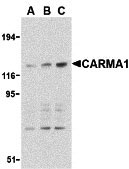
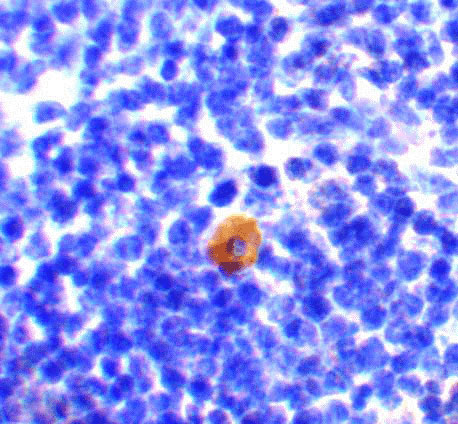
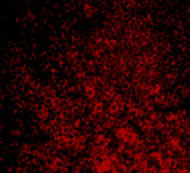
- 产品详情
- 实验流程
- 背景知识
Application 
| WB, IF, E, IHC-P |
|---|---|
| Primary Accession | Q9BXL7 |
| Other Accession | Q9BXL7, 172046231 |
| Reactivity | Human, Mouse |
| Host | Rabbit |
| Clonality | Polyclonal |
| Isotype | IgG |
| Calculated MW | 133284 Da |
| Concentration (mg/ml) | 1 mg/mL |
| Conjugate | Unconjugated |
| Application Notes | CARMA1 antibody can be used for detection of CARMA1 by Western blot at 0.5 to 2 µg/mL. A band at approximately 125 kDa can be detected. Antibody can also be used for immunohistochemistry starting at 10 µg/mL. For immunofluorescence start at 20 µg/mL. |
| Gene ID | 84433 |
|---|---|
| Other Names | CARMA1 Antibody: PPBL, BENTA, BIMP3, IMD11, CARMA1, Caspase recruitment domain-containing protein 11, CARD-containing MAGUK protein 1, Carma 1, caspase recruitment domain family, member 11 |
| Target/Specificity | CARD11; |
| Reconstitution & Storage | CARMA1 antibody can be stored at 4℃ for three months and -20℃, stable for up to one year. As with all antibodies care should be taken to avoid repeated freeze thaw cycles. Antibodies should not be exposed to prolonged high temperatures. |
| Precautions | CARMA1 Antibody is for research use only and not for use in diagnostic or therapeutic procedures. |
For Research Use Only. Not For Use In Diagnostic Procedures.
| Name | CARD11 {ECO:0000303|PubMed:11278692, ECO:0000312|HGNC:HGNC:16393} |
|---|---|
| Function | Adapter protein that plays a key role in adaptive immune response by transducing the activation of NF-kappa-B downstream of T- cell receptor (TCR) and B-cell receptor (BCR) engagement (PubMed:11278692, PubMed:11356195, PubMed:12356734). Transduces signals downstream TCR or BCR activation via the formation of a multiprotein complex together with BCL10 and MALT1 that induces NF-kappa-B and MAP kinase p38 (MAPK11, MAPK12, MAPK13 and/or MAPK14) pathways (PubMed:11356195). Upon activation in response to TCR or BCR triggering, CARD11 homooligomerizes to form a nucleating helical template that recruits BCL10 via CARD-CARD interaction, thereby promoting polymerization of BCL10 and subsequent recruitment of MALT1: this leads to I-kappa-B kinase (IKK) phosphorylation and degradation, and release of NF-kappa-B proteins for nuclear translocation (PubMed:24074955). Its binding to DPP4 induces T-cell proliferation and NF-kappa-B activation in a T-cell receptor/CD3-dependent manner (PubMed:17287217). Promotes linear ubiquitination of BCL10 by promoting the targeting of BCL10 to RNF31/HOIP (PubMed:27777308). Stimulates the phosphorylation of BCL10 (PubMed:11356195). Also activates the TORC1 signaling pathway (PubMed:28628108). |
| Cellular Location | Cytoplasm. Membrane raft. Note=Colocalized with DPP4 in membrane rafts. |
| Tissue Location | Detected in adult peripheral blood leukocytes, thymus, spleen and liver. Also found in promyelocytic leukemia HL-60 cells, chronic myelogenous leukemia K-562 cells, Burkitt's lymphoma Raji cells and colorectal adenocarcinoma SW480 cells. Not detected in HeLaS3, MOLT-4, A-549 and G431 cells. |
Provided below are standard protocols that you may find useful for product applications.
BACKGROUND
CARMA1 Antibody: CARMA proteins belong to the membrane-associated guanylate kinase-like (MAGUK) family of proteins that can function as molecular scaffolds that assist assembly of signal transduction molecules. CARMA1, CARMA2, and CARMA3 share high degrees of sequence and functional homology, but their tissue-specific distribution suggests that they serve distinct biological functions in different cell types. Both CARMA1 and CARMA3 associate with NEMO, the regulatory subunit of the IκK complex, thereby regulating activation of the NF-κB transcription factor. Also, gene inactivation studies showed a complete block in T and B cell immunity as well as an impaired response to LPS, indicating that CARMA1 is a critical regulator in both the adaptive and innate immune systems.
REFERENCES
Fanning AS and Anderson JM. Protein modules as organizers of membrane structure.Curr. Opin. Cell Biol. 1999; 11:432-9.
Gaide O, Martinon F, Michau O, et al. Carma1, 1 CARD-containing binding partner of Bcl10, induces Bcl10 phosphorylation and NF-κ B activation. FEBS Lett. 2001; 496:121-7.
Bertin J, Wang L, Guo Y, et al. CARD11 and CARD14 are novel caspase recruitment domain (CARD)/membrane-associated guanylate kinase (MAGUK) family members that interact with BCL10 and activate NF-κ B. J. Biol. Chem. 2001; 276:11877-82.
McAllister-Lucas LM, Inohara N, Lucas PC, et al. Bimp1, a MAGUK family member linking protein kinase C activation to Bcl10-mediated NF-κB induction. J. Biol. Chem. 2001; 276:30589-97.

终于等到您。ABCEPTA(百远生物)抗体产品。
点击下方“我要评价 ”按钮提交您的反馈信息,您的反馈和评价是我们最宝贵的财富之一,
我们将在1-3个工作日内处理您的反馈信息。
如有疑问,联系:0512-88856768 tech-china@abcepta.com.


