


 癌症的基本特征包括细胞增殖、血管生成、迁移、凋亡逃避机制和细胞永生等。找到癌症发生过程中这些通路的关键标记物和对应的抗体用于检测至关重要。
 为您推荐一个泛素化位点预测神器——泛素化分析工具,可以为您的蛋白的泛素化位点作出预测和评分。
 细胞自噬受体图形绘图工具为你的蛋白的细胞受体结合位点作出预测和评分,识别结合到自噬通路中的蛋白是非常重要的,便于让我们理解自噬在正常生理、病理过程中的作用,如发育、细胞分化、神经退化性疾病、压力条件下、感染和癌症。
NAIP Antibody
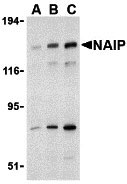
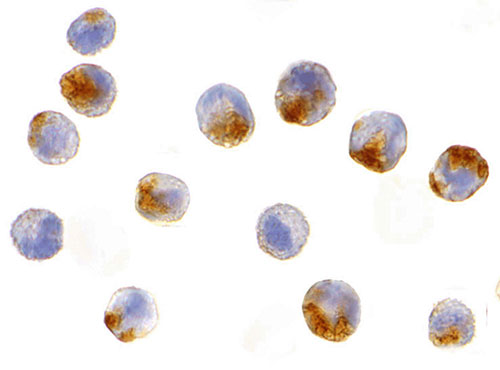
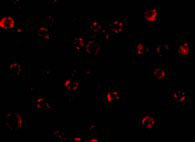
- 产品详情
- 实验流程
- 背景知识
Application 
| WB, IF, ICC, E |
|---|---|
| Primary Accession | Q13075 |
| Other Accession | AAC52047, 1737213 |
| Reactivity | Human |
| Host | Rabbit |
| Clonality | Polyclonal |
| Isotype | IgG |
| Calculated MW | 159582 Da |
| Concentration (mg/ml) | 1 mg/mL |
| Conjugate | Unconjugated |
| Application Notes | NAIP antibody can be used for the detection of NAIP by Western blot at 0.5 to 2 µg/mL. Antibody can also be used for immunocytochemistry starting at 10 µg/mL. For immunofluorescence start at 20 µg/mL. |
| Gene ID | 4671 |
|---|---|
| Other Names | NAIP Antibody: BIRC1, NLRB1, psiNAIP, BIRC1, Baculoviral IAP repeat-containing protein 1, Neuronal apoptosis inhibitory protein, NLR family, apoptosis inhibitory protein |
| Target/Specificity | NAIP; Minor, lower molecular weight bands may represent alternately spliced forms. |
| Reconstitution & Storage | NAIP antibody can be stored at 4℃ for three months and -20℃, stable for up to one year. As with all antibodies care should be taken to avoid repeated freeze thaw cycles. Antibodies should not be exposed to prolonged high temperatures. |
| Precautions | NAIP Antibody is for research use only and not for use in diagnostic or therapeutic procedures. |
For Research Use Only. Not For Use In Diagnostic Procedures.
| Name | NAIP |
|---|---|
| Synonyms | BIRC1 |
| Function | Anti-apoptotic protein which acts by inhibiting the activities of CASP3, CASP7 and CASP9. Can inhibit the autocleavage of pro-CASP9 and cleavage of pro-CASP3 by CASP9. Capable of inhibiting CASP9 autoproteolysis at 'Asp-315' and decreasing the rate of auto proteolysis at 'Asp-330'. Acts as a mediator of neuronal survival in pathological conditions. Prevents motor-neuron apoptosis induced by a variety of signals. Possible role in the prevention of spinal muscular atrophy that seems to be caused by inappropriate persistence of motor- neuron apoptosis: mutated or deleted forms of NAIP have been found in individuals with severe spinal muscular atrophy. |
| Tissue Location | Expressed in motor neurons, but not in sensory neurons. Found in liver and placenta, and to a lesser extent in spinal cord |
Provided below are standard protocols that you may find useful for product applications.
BACKGROUND
NAIP Antibody: Neuronal apoptosis inhibitor protein (NAIP) was the first human inhibitor of apoptosis protein (IAP) identified and was discovered by its association with the neurodegenerative disorder spinal muscular atrophy. Members of the IAP family contain one to three copies of an approximately 70 amino acid motif termed baculovirus IAP repeat (BIR); these BIRs promote protein-protein interactions with various caspases such as caspase-3, -7, and -9 as well as members of the TRAF family of signal molecules. Unlike other IAPs however, NAIP requires ATP to bind caspase-9 and is not inhibited by the IAP-inhibiting molecule Smac/DIABLO, suggesting that NAIP is unique among the IAPs in its regulation of its activity. Finally, although only one human NAIP protein has been identified, other shorter NAIP mRNA transcripts have been reported.
REFERENCES
Roy N, Mahadevan MS, McLean M, et al. The gene for neuronal apoptosis inhibitory protein is partially deleted in individuals with spinal muscular atrophy. Cell 1995; 80:167-78.
Liston P, Fong WG, Korneluk RG. The inhibitors of apoptosis: there is more to life than Bcl2. Oncogene 2003; 22:8568-80.
Verhagen AM, Coulson EJ, and Vaux DL. Inhibitor of apoptosis proteins and their relatives: IAPs and other BIRPs. Genome Biol. 2001; 2:reviews3009.1-reviews3009.10.
Davoodi J, Lin L, Kelly J, et al. Neuronal apoptosis-inhibitory protein does not interact with Smac and requires ATP to bind caspase-9. J. Biol. Chem. 2004; 279:40622-8.

终于等到您。ABCEPTA(百远生物)抗体产品。
点击下方“我要评价 ”按钮提交您的反馈信息,您的反馈和评价是我们最宝贵的财富之一,
我们将在1-3个工作日内处理您的反馈信息。
如有疑问,联系:0512-88856768 tech-china@abcepta.com.


