


 癌症的基本特征包括细胞增殖、血管生成、迁移、凋亡逃避机制和细胞永生等。找到癌症发生过程中这些通路的关键标记物和对应的抗体用于检测至关重要。
 为您推荐一个泛素化位点预测神器——泛素化分析工具,可以为您的蛋白的泛素化位点作出预测和评分。
 细胞自噬受体图形绘图工具为你的蛋白的细胞受体结合位点作出预测和评分,识别结合到自噬通路中的蛋白是非常重要的,便于让我们理解自噬在正常生理、病理过程中的作用,如发育、细胞分化、神经退化性疾病、压力条件下、感染和癌症。
CTRP3 Antibody
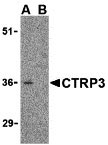
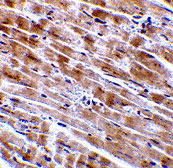
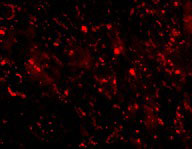
- 产品详情
- 实验流程
- 背景知识
Application 
| WB, IF, E, IHC-P |
|---|---|
| Primary Accession | Q9BXJ4 |
| Other Accession | NP_852100, 62739183 |
| Reactivity | Human, Mouse |
| Host | Rabbit |
| Clonality | Polyclonal |
| Isotype | IgG |
| Calculated MW | 26994 Da |
| Concentration (mg/ml) | 1 mg/mL |
| Conjugate | Unconjugated |
| Application Notes | CTRP3 antibody can be used for the detection of CTRP3 by Western blot at 1 µg/mL. Antibody can also be used for immunohistochemistry starting at 2 µg/mL. For immunofluorescence start at 10 µg/mL. |
| Gene ID | 114899 |
|---|---|
| Other Names | CTRP3 Antibody: CORS, CORCS, CTRP3, CORS26, C1ATNF3, CORS-26, UNQ753/PRO1484, Complement C1q tumor necrosis factor-related protein 3, Collagenous repeat-containing sequence 26 kDa protein, C1q and tumor necrosis factor related protein 3 |
| Target/Specificity | C1QTNF3; Multiple isoforms of CTRP3 are known to exist. CTRP3 antibody is predicted to not recognize other members of the CTRP protein family. |
| Reconstitution & Storage | CTRP3 antibody can be stored at 4℃ for three months and -20℃, stable for up to one year. As with all antibodies care should be taken to avoid repeated freeze thaw cycles. Antibodies should not be exposed to prolonged high temperatures. |
| Precautions | CTRP3 Antibody is for research use only and not for use in diagnostic or therapeutic procedures. |
For Research Use Only. Not For Use In Diagnostic Procedures.
| Name | C1QTNF3 |
|---|---|
| Synonyms | CTRP3 |
| Cellular Location | Secreted. |
| Tissue Location | Expressed in colon and small intestine. |
Provided below are standard protocols that you may find useful for product applications.
BACKGROUND
CTRP3 Antibody: Adipose tissue of an organism plays a major role in regulating physiologic and pathologic processes such as metabolism and immunity by producing and secreting a variety of bioactive molecules termed adipokines. One highly conserved family of adipokines is adiponectin/ACRP30 and its structural and functional paralogs, the C1q/tumor necrosis factor-alpha-related proteins (CTRPs) 1-7. Unlike adiponectin, which is expressed exclusively by differentiated adipocytes, the CTRPs are expressed in a wide variety of tissues. An analysis of the crystal structure of adiponectin revealed a structural and evolutionary link between TNF and C1q-containing proteins, suggesting that these proteins arose from a common ancestral innate immunity gene. It has been suggested that CTRP3 may play a role in skeletal development.
REFERENCES
Fantuzzi G. Adipose tissue, adipokines, and inflammation. J. Allergy Clin. Immunol. 2005; 115:911-9.
Tsao T-S, Lodish HF, and Fruebis J. ACRP30, a new hormone controlling fat and glucose metabolism. Euro. J. Pharmacol. 2002; 440:213-21.
Wong GW, Wang J, Hug C, et al. A family of Acrp30/ adiponectin structural and functional paralogs. Proc. Natl. Acad. Sci. USA 2004; 101:10302-7.
Shapiro L and Scherer PE. The crystal structure of a complement-1q family protein suggests an evolutionary link to tumor necrosis factor. Curr. Biol. 1998; 8:335-8.

终于等到您。ABCEPTA(百远生物)抗体产品。
点击下方“我要评价 ”按钮提交您的反馈信息,您的反馈和评价是我们最宝贵的财富之一,
我们将在1-3个工作日内处理您的反馈信息。
如有疑问,联系:0512-88856768 tech-china@abcepta.com.


