


 癌症的基本特征包括细胞增殖、血管生成、迁移、凋亡逃避机制和细胞永生等。找到癌症发生过程中这些通路的关键标记物和对应的抗体用于检测至关重要。
 为您推荐一个泛素化位点预测神器——泛素化分析工具,可以为您的蛋白的泛素化位点作出预测和评分。
 细胞自噬受体图形绘图工具为你的蛋白的细胞受体结合位点作出预测和评分,识别结合到自噬通路中的蛋白是非常重要的,便于让我们理解自噬在正常生理、病理过程中的作用,如发育、细胞分化、神经退化性疾病、压力条件下、感染和癌症。
FNIP2 Antibody
- 产品详情
- 实验流程
- 背景知识
Application 
| WB, E, IHC-P |
|---|---|
| Primary Accession | Q9P278 |
| Other Accession | NP_065891, 154689769 |
| Reactivity | Human, Mouse, Rat |
| Host | Rabbit |
| Clonality | Polyclonal |
| Isotype | IgG |
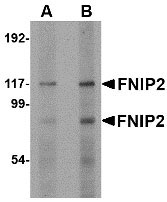
| Calculated MW | 122115 Da |
| Concentration (mg/ml) | 1 mg/mL |
| Conjugate | Unconjugated |
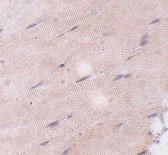
| Application Notes | FNIP2 antibody can be used for detection of FNIP2 by Western blot at 1 - 2 µg/mL. Antibody can also be used for immunohistochemistry starting at 5 µg/mL. |
| Gene ID | 57600 |
|---|---|
| Other Names | Folliculin-interacting protein 2, FNIP1-like protein, O6-methylguanine-induced apoptosis 1 protein, FNIP2, FNIPL, KIAA1450, MAPO1 |
| Target/Specificity | FNIP2; Multiple isoforms of FNIP2 are known to exist. This antibody is predicted to not cross-react with FNIP1. |
| Reconstitution & Storage | FNIP2 antibody can be stored at 4℃ for three months and -20℃, stable for up to one year. As with all antibodies care should be taken to avoid repeated freeze thaw cycles. Antibodies should not be exposed to prolonged high temperatures. |
| Precautions | FNIP2 Antibody is for research use only and not for use in diagnostic or therapeutic procedures. |
For Research Use Only. Not For Use In Diagnostic Procedures.
| Name | FNIP2 {ECO:0000303|PubMed:18663353, ECO:0000312|HGNC:HGNC:29280} |
|---|---|
| Function | Binding partner of the GTPase-activating protein FLCN: involved in the cellular response to amino acid availability by regulating the non-canonical mTORC1 signaling cascade controlling the MiT/TFE factors TFEB and TFE3 (PubMed:18663353, PubMed:31672913, PubMed:36103527). Required to promote FLCN recruitment to lysosomes and interaction with Rag GTPases, leading to activation of the non- canonical mTORC1 signaling (By similarity). In low-amino acid conditions, component of the lysosomal folliculin complex (LFC) on the membrane of lysosomes, which inhibits the GTPase-activating activity of FLCN, thereby inactivating mTORC1 and promoting nuclear translocation of TFEB and TFE3 (PubMed:31672913, PubMed:36103527). Upon amino acid restimulation, disassembly of the LFC complex liberates the GTPase- activating activity of FLCN, leading to activation of mTORC1 and subsequent inactivation of TFEB and TFE3 (PubMed:31672913). Together with FLCN, regulates autophagy: following phosphorylation by ULK1, interacts with GABARAP and promotes autophagy (PubMed:25126726). Interaction with GABARAP also inhibits the non-canonical mTORC1 signaling cascade: GABARAP sequesters FLCN, thereby inactivating mTORC1 and promoting nuclear translocation of TFEB and TFE3 (PubMed:34597140). In addition to its role in mTORC1 signaling, also acts as a co- chaperone of HSP90AA1/Hsp90: inhibits the ATPase activity of HSP90AA1/Hsp90, leading to activate both kinase and non-kinase client proteins of HSP90AA1/Hsp90 (PubMed:18403135). Acts as a scaffold to load client protein FLCN onto HSP90AA1/Hsp90 (PubMed:18403135). Competes with the activating co-chaperone AHSA1 for binding to HSP90AA1, thereby providing a reciprocal regulatory mechanism for chaperoning of client proteins (PubMed:18403135). May play a role in the signal transduction pathway of apoptosis induced by O6- methylguanine-mispaired lesions (By similarity). |
| Cellular Location | Lysosome membrane. Cytoplasm. Note=Colocalizes with FLCN in the cytoplasm. |
| Tissue Location | Widely expressed with highest levels in muscle, nasal mucosa, salivary gland, uvula, fat, liver, heart, placenta and pancreas (PubMed:18403135, PubMed:18663353, PubMed:27353360) Moderately expressed in the lung, small intestine, kidney and brain Lower levels detected in renal cell carcinoma than in normal kidney tissue (PubMed:18403135). Higher levels detected in oncocytoma tumors than in normal kidney. Higher levels detected in renal cell carcinoma tumors than in normal kidney tissue (PubMed:27353360) |
Provided below are standard protocols that you may find useful for product applications.
BACKGROUND
FNIP2 Antibody: FNIP2 is the second protein found to interact with folliculin, the product of the Birt-Hogg-Dube (BHD) gene. Folliculin is thought to act as a tumor suppressor as mutations or loss of heterozygosity in this gene are associated with BHD syndrome-related renal tumors. Folliculin and FNIP1, a protein that shares 49% identity to FNIP2, bind to AMPK, an important energy sensor in cells that negatively regulates the mammalian target of rapamycin (mTOR), a protein that is thought to be the master switch for cell growth and proliferation. FNIP1 and FNIP2 are able to form homo- and heteromeric multimers, suggesting these proteins may have a functional relationship.
REFERENCES
Hasumi H, Baba M, Hong S-B, et al. Identification and characterization of a novel folliculin-interacting protein FNIP2. Gene2008; 415:60-7.
Takagi Y, Kobayashi T, Shiono M, et al. Interaction of folliculin (Birt-Hogg-Dube gene product) with novel Fnip1-like (FnipL/Fnip2) protein. Oncogene2008; 27:5339-47.
Vocke CD, Yang Y, Pavlovich CP, et al. High frequency of somatic frameshift BHD mutations in Birt-Hogg-Dube-associated renal tumors. J. Natl. Cancer Inst.2005; 97:931-5.
Baba M, Hong SB, Sharma M, et al. Folliculin encoded by the BHD gene interacts with a binding protein, FNIP1, and AMPK, and is involved in AMPK and mTOR signaling. Proc. Natl. Acad. Sci. USA2006; 103:15552-7.

终于等到您。ABCEPTA(百远生物)抗体产品。
点击下方“我要评价 ”按钮提交您的反馈信息,您的反馈和评价是我们最宝贵的财富之一,
我们将在1-3个工作日内处理您的反馈信息。
如有疑问,联系:0512-88856768 tech-china@abcepta.com.


