


 癌症的基本特征包括细胞增殖、血管生成、迁移、凋亡逃避机制和细胞永生等。找到癌症发生过程中这些通路的关键标记物和对应的抗体用于检测至关重要。
 为您推荐一个泛素化位点预测神器——泛素化分析工具,可以为您的蛋白的泛素化位点作出预测和评分。
 细胞自噬受体图形绘图工具为你的蛋白的细胞受体结合位点作出预测和评分,识别结合到自噬通路中的蛋白是非常重要的,便于让我们理解自噬在正常生理、病理过程中的作用,如发育、细胞分化、神经退化性疾病、压力条件下、感染和癌症。
ZC3HAV1 Antibody
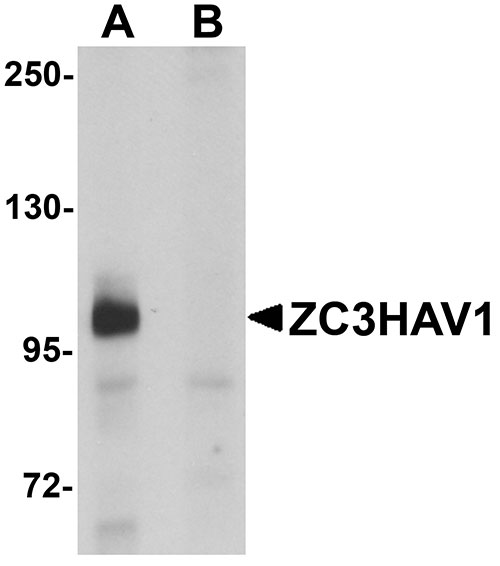
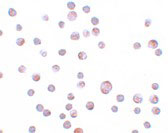
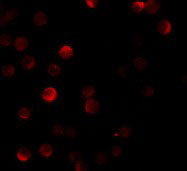
- 产品详情
- 实验流程
- 背景知识
Application 
| WB, IF, ICC, E |
|---|---|
| Primary Accession | Q7Z2W4 |
| Other Accession | NP_078901, 27477138 |
| Reactivity | Human |
| Host | Rabbit |
| Clonality | Polyclonal |
| Isotype | IgG |
| Calculated MW | 101431 Da |
| Concentration (mg/ml) | 1 mg/mL |
| Conjugate | Unconjugated |
| Application Notes | ZC3HAV1 antibody can be used for detection of ZC3HAV1 by Western blot at 1 µg/mL. Antibody can also be used for immunocytochemistry starting at 20 µg/mL. For immunofluorescence start at 20 µg/mL. |
| Gene ID | 56829 |
|---|---|
| Other Names | Zinc finger CCCH-type antiviral protein 1, ADP-ribosyltransferase diphtheria toxin-like 13, ARTD13, Zinc finger CCCH domain-containing protein 2, Zinc finger antiviral protein, ZAP, ZC3HAV1, ZC3HDC2 |
| Target/Specificity | ZC3HAV1; |
| Reconstitution & Storage | ZC3HAV1 antibody can be stored at 4℃ for three months and -20℃, stable for up to one year. As with all antibodies care should be taken to avoid repeated freeze thaw cycles. Antibodies should not be exposed to prolonged high temperatures. |
| Precautions | ZC3HAV1 Antibody is for research use only and not for use in diagnostic or therapeutic procedures. |
For Research Use Only. Not For Use In Diagnostic Procedures.
| Name | ZC3HAV1 (HGNC:23721) |
|---|---|
| Synonyms | ZC3HDC2 |
| Function | Antiviral protein which inhibits the replication of viruses by recruiting the cellular RNA degradation machineries to degrade the viral mRNAs (PubMed:32866210). Binds to a ZAP-responsive element (ZRE) present in the target viral mRNA, recruits cellular poly(A)-specific ribonuclease PARN to remove the poly(A) tail, and the 3'-5' exoribonuclease complex exosome to degrade the RNA body from the 3'- end. It also recruits the decapping complex DCP1-DCP2 through RNA helicase p72 (DDX17) to remove the cap structure of the viral mRNA to initiate its degradation from the 5'-end. Its target viruses belong to families which include retroviridae, including human immunodeficiency virus type 1, filoviridae: ebola virus (EBOV) and marburg virus (MARV), togaviridae: sindbis virus (SINV) and Ross river virus (RRV). Specifically targets the multiply spliced but not unspliced or singly spliced HIV-1 mRNAs for degradation. |
| Cellular Location | [Isoform 1]: Nucleus {ECO:0000250|UniProtKB:Q3UPF5}. Lysosome {ECO:0000250|UniProtKB:Q3UPF5}. Late endosome {ECO:0000250|UniProtKB:Q3UPF5}. Note=Contrary to isoform 3, hardly detectable in the cytosol (By similarity). Localization to late endosomes/lysosomes depends upon farnesylation at Cys-993. Does not localize to early endosomes (By similarity) {ECO:0000250|UniProtKB:Q3UPF5} |
Provided below are standard protocols that you may find useful for product applications.
BACKGROUND
ZC3HAV1 Antibody: The zinc finger antiviral protein (ZC3HAV1) is a CCCH type zinc finger protein that induces an innate immunity to infections by retrovirus by preventing the accumulation of viral RNAs in the cytoplasm and recruits the RNA processing exosome to degrade target RNAs, thereby inhibiting virus replication. ZC3HAV1 is localized in the cytoplasm at steady state, but shuttles between nucleus and cytoplasm in a XPO1-dependent manner. ZAP is a direct target gene of IRF3 action in cellular antiviral responses.
REFERENCES
Gao G, Guo X, and Goff SP. Inhibition of retroviral RNA production by ZAP, a CCCH-Type zinc finger protein. Science2002; 297:1703-6.
Guo X, Ma J, Sun J, et al. The zinc-finger antiviral protein recruits the RNA processing exosome to degrade the target mRNA. Proc. Natl. Acad. Sci. USA2007; 104:151-6.
MacDonald MR, Machlin ES, Albin OR, et al. The zinc finger antiviral protein acts synergistically with an interferon-induced factor for maximal activity against alphaviruses. J. Virol. 2007; 81:13509-18.
Wang N, Dong Q, Li J, et al. Viral induction of the zinc finger antiviral protein is IRF3-dependent but NF-kappaB-independent. J. Biol. Chem.2010; 285:6080-90.

终于等到您。ABCEPTA(百远生物)抗体产品。
点击下方“我要评价 ”按钮提交您的反馈信息,您的反馈和评价是我们最宝贵的财富之一,
我们将在1-3个工作日内处理您的反馈信息。
如有疑问,联系:0512-88856768 tech-china@abcepta.com.


