


 癌症的基本特征包括细胞增殖、血管生成、迁移、凋亡逃避机制和细胞永生等。找到癌症发生过程中这些通路的关键标记物和对应的抗体用于检测至关重要。
 为您推荐一个泛素化位点预测神器——泛素化分析工具,可以为您的蛋白的泛素化位点作出预测和评分。
 细胞自噬受体图形绘图工具为你的蛋白的细胞受体结合位点作出预测和评分,识别结合到自噬通路中的蛋白是非常重要的,便于让我们理解自噬在正常生理、病理过程中的作用,如发育、细胞分化、神经退化性疾病、压力条件下、感染和癌症。
SYNPO2 Antibody
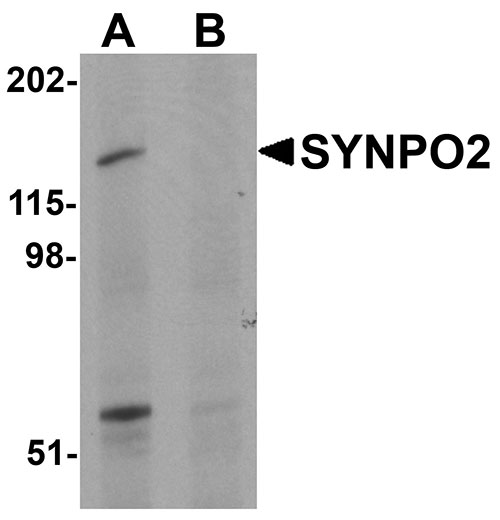
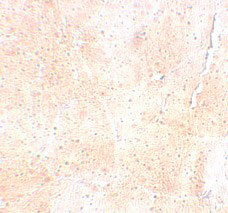
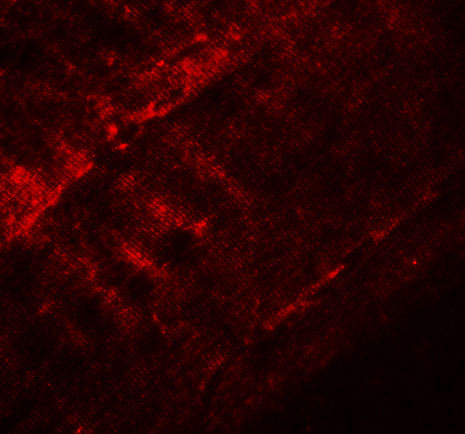
- 产品详情
- 实验流程
- 背景知识
Application 
| WB, IF, E, IHC-P |
|---|---|
| Primary Accession | Q9UMS6 |
| Other Accession | NP_597734, 193083183 |
| Reactivity | Human, Mouse |
| Host | Rabbit |
| Clonality | Polyclonal |
| Isotype | IgG |
| Calculated MW | 117514 Da |
| Concentration (mg/ml) | 1 mg/mL |
| Conjugate | Unconjugated |
| Application Notes | SYNPO2 antibody can be used for detection of SYNPO2 by Western blot at 1 µg/mL. Antibody can also be used for immunohistochemistry starting at 5 µg/mL. For immunofluorescence start at 20 µg/mL. |
| Gene ID | 171024 |
|---|---|
| Other Names | Synaptopodin-2, Genethonin-2, Myopodin, SYNPO2 |
| Target/Specificity | SYNPO2; |
| Reconstitution & Storage | SYNPO2 antibody can be stored at 4℃ for three months and -20℃, stable for up to one year. As with all antibodies care should be taken to avoid repeated freeze thaw cycles. Antibodies should not be exposed to prolonged high temperatures. |
| Precautions | SYNPO2 Antibody is for research use only and not for use in diagnostic or therapeutic procedures. |
For Research Use Only. Not For Use In Diagnostic Procedures.
| Name | SYNPO2 |
|---|---|
| Function | Has an actin-binding and actin-bundling activity. Can induce the formation of F-actin networks in an isoform-specific manner (PubMed:23225103, PubMed:24005909). At the sarcomeric Z lines is proposed to act as adapter protein that links nascent myofibers to the sarcolemma via ZYX and may play a role in early assembly and stabilization of the Z lines. Involved in autophagosome formation. May play a role in chaperone-assisted selective autophagy (CASA) involved in Z lines maintenance in striated muscle under mechanical tension; may link the client-processing CASA chaperone machinery to a membrane- tethering and fusion complex providing autophagosome membranes (By similarity). Involved in regulation of cell migration (PubMed:22915763, PubMed:25883213). May be a tumor suppressor (PubMed:16885336). |
| Cellular Location | Nucleus {ECO:0000250|UniProtKB:Q91YE8}. Cytoplasm {ECO:0000250|UniProtKB:Q91YE8}. Cytoplasm, cytoskeleton. Cytoplasm, myofibril, sarcomere, Z line. Cell junction, focal adhesion. Note=Shuttles between the nucleus and the cytoplasm in a differentiation-dependent and stress-induced fashion. In undifferentiated myoblasts strongly expressed in the nucleus, after induction of myotube differentiation is located to both nucleus and cytoplasm along acting filaments, and in differentiated myotubes is located at the Z lines. Upon stress redistributes from cytoplasm of myoblasts and myotubes to the nucleus. Nuclear import is KPNA2-dependent and promoted by phosphorylation by PKA and/or CaMK2, and inhibition of calcineurin. The nuclear export is XPO1-dependent (By similarity). Localized in a fiber-like pattern, partly overlapping with filamentous actin (PubMed:18371299). {ECO:0000250|UniProtKB:Q91YE8, ECO:0000269|PubMed:18371299} [Isoform 2]: Cytoplasm, cytoskeleton. Note=Localizes to induced actin bundles with punctuate staining. [Isoform 4]: Cytoplasm, cytoskeleton. Note=Localizes to induced actin bundles with punctuate staining. |
| Tissue Location | Expressed in heart muscle. Isoform 5 is specifically expressed in skeletal muscle |
Provided below are standard protocols that you may find useful for product applications.
BACKGROUND
SYNPO2 Antibody: SYNPO2 was initially identified as myopodin, a member of the synaptopodin family that contains one PPXY motif and multiple PXXP motifs. It colocalizes with alpha-actinin and is found at the Z-disc and during stress conditions will translocate to the nucleus, suggesting that it is part of signaling pathways in addition to its function as a structural protein. SYNPO2 has been shown to bind to calmodulin, alpha-actinin, and smooth muscle myosin and will stimulate actin polymerization in a calmodulin dependent manner, consistent with its proposed role in organizing the cytoskeleton. While deletion of SYNPO2 has been reported to be highly correlated with the invasiveness of prostate cancers, other reports suggest that down-regulation of SYNPO2 reduces the invasiveness and motility of prostate cancer cells.
REFERENCES
Weins A, Schwarz K, Faul C, et al. Differentiation- and stress-dependent nuclear cytoplasmic redistribution of myopodin, a novel actin-bundling protein. J. Cell Biol.2001; 155:393-404.
Shroeter MM, Beall B, Heid HW, et al. In vitro characterization of native mammalian smooth-muscle protein synaptopodin. Biosci. Rep.2008; 195-203.
Lin F, Yu YP, Woods J, et al. Myopodin, a synaptopodin homologue, is frequently deleted in invasive prostate cancers. Am. J. Path.2001; 5:1603-12.
De Ganck A, De Corte V, Bruyneel E, et al. Down-regulation of myopodin expression reduces invasion and motility of PC-3 prostate cancer cells. Int. J. Oncol.2009; 34:1403-9.

终于等到您。ABCEPTA(百远生物)抗体产品。
点击下方“我要评价 ”按钮提交您的反馈信息,您的反馈和评价是我们最宝贵的财富之一,
我们将在1-3个工作日内处理您的反馈信息。
如有疑问,联系:0512-88856768 tech-china@abcepta.com.


