


 癌症的基本特征包括细胞增殖、血管生成、迁移、凋亡逃避机制和细胞永生等。找到癌症发生过程中这些通路的关键标记物和对应的抗体用于检测至关重要。
 为您推荐一个泛素化位点预测神器——泛素化分析工具,可以为您的蛋白的泛素化位点作出预测和评分。
 细胞自噬受体图形绘图工具为你的蛋白的细胞受体结合位点作出预测和评分,识别结合到自噬通路中的蛋白是非常重要的,便于让我们理解自噬在正常生理、病理过程中的作用,如发育、细胞分化、神经退化性疾病、压力条件下、感染和癌症。
ZIP7 Antibody
- 产品详情
- 实验流程
- 背景知识
Application 
| WB, IF, E, IHC-P |
|---|---|
| Primary Accession | Q92504 |
| Other Accession | NP_001070984, 117553619 |
| Reactivity | Human, Mouse, Rat |
| Host | Rabbit |
| Clonality | Polyclonal |
| Isotype | IgG |
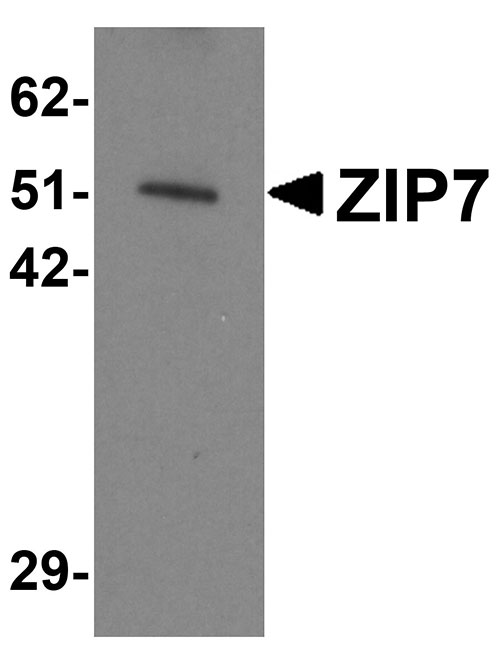
| Calculated MW | 50118 Da |
| Concentration (mg/ml) | 1 mg/mL |
| Conjugate | Unconjugated |
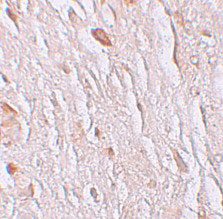
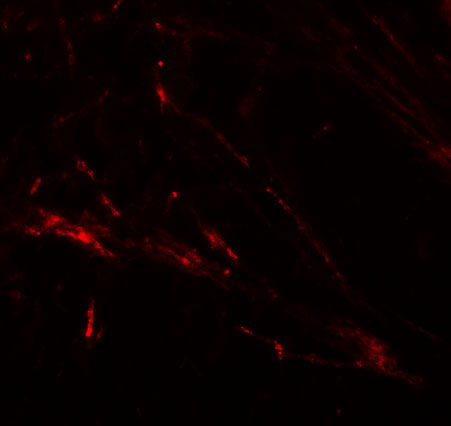
| Application Notes | ZIP7 antibody can be used for detection of ZIP7 by Western blot at 0.5 µg/mL. Antibody can also be used for immunohistochemistry starting at 2.5 µg/mL. For immunofluorescence start at 20 µg/mL. |
| Gene ID | 7922 |
|---|---|
| Other Names | Zinc transporter SLC39A7, Histidine-rich membrane protein Ke4, Really interesting new gene 5 protein, Solute carrier family 39 member 7, Zrt-, Irt-like protein 7, ZIP7, SLC39A7, HKE4, RING5 |
| Target/Specificity | SLC39A7; |
| Reconstitution & Storage | ZIP7 antibody can be stored at 4℃ for three months and -20℃, stable for up to one year. As with all antibodies care should be taken to avoid repeated freeze thaw cycles. Antibodies should not be exposed to prolonged high temperatures. |
| Precautions | ZIP7 Antibody is for research use only and not for use in diagnostic or therapeutic procedures. |
For Research Use Only. Not For Use In Diagnostic Procedures.
| Name | SLC39A7 |
|---|---|
| Synonyms | HKE4 {ECO:0000303|PubMed:14525538}, RING |
| Function | Transports Zn(2+) from the endoplasmic reticulum (ER)/Golgi apparatus to the cytosol, playing an essential role in the regulation of cytosolic zinc levels (PubMed:14525538, PubMed:15705588, PubMed:28205653, PubMed:29980658). Acts as a gatekeeper of zinc release from intracellular stores, requiring post-translational activation by phosphorylation, resulting in activation of multiple downstream pathways leading to cell growth and proliferation (PubMed:22317921, PubMed:28205653, PubMed:29980658). Has an essential role in B cell development and is required for proper B cell receptor signaling (PubMed:30718914). Plays an important role in maintaining intestinal epithelial homeostasis and skin dermis development by regulating ER function (By similarity). Controls cell signaling pathways involved in glucose metabolism in skeletal muscle (By similarity). Has a protective role against ER stress in different biological contexts (PubMed:29980658, PubMed:30237509). Mediates Zn(2+)-induced ferroptosis (PubMed:33608508). |
| Cellular Location | Endoplasmic reticulum membrane; Multi-pass membrane protein. Golgi apparatus, cis-Golgi network membrane; Multi-pass membrane protein |
| Tissue Location | Widely expressed. |
Provided below are standard protocols that you may find useful for product applications.
BACKGROUND
ZIP7 Antibody: The zinc transporter ZIP7, also known as SLC39A7, is a member of a family of divalent ion transporters. Zinc is an essential ion for cells and plays significant roles in the growth, development, and differentiation. ZIP7 was initially identified while characterizing genes in the major histocompatibility complex on chromosome 17. ZIP7 mRNA is abundantly and widely expressed and the protein localizes to the Golgi apparatus. It functions to transport intracellular zinc from the Golgi apparatus to the cytoplasm of the cell. ZIP7 expression is expressed by zinc. ZIP7 has been suggested to act a hub for tyrosine kinase activation and may thus be a potential therapeutic target for diseases such as cancer where prevention of tyrosine kinase activation would be advantageous.
REFERENCES
Dufner-Beattie J, Langmade SJ, Wang F, et al. Structure, function, and regulation of a subfamily of mouse zinc transporter genes. J. Biol. Chem.2003; 278:50142-50.
Eide DJ. The SLC39 family of metal ion transporters. Pflugers Arch.2004; 447:796-800.
Taylor KM and Nicohlson RI. The LZT proteins; the LIV-1 subfamily of zinc transporters. Biochim. Biophys. Acta.2003; 1611:16-30.
Lai F, Stubbs L, Lehrach H, et al. Genomic organization and expressed sequences of the mouse extended H-2K region. Genomics1994; 23:338-42.

终于等到您。ABCEPTA(百远生物)抗体产品。
点击下方“我要评价 ”按钮提交您的反馈信息,您的反馈和评价是我们最宝贵的财富之一,
我们将在1-3个工作日内处理您的反馈信息。
如有疑问,联系:0512-88856768 tech-china@abcepta.com.


