


 癌症的基本特征包括细胞增殖、血管生成、迁移、凋亡逃避机制和细胞永生等。找到癌症发生过程中这些通路的关键标记物和对应的抗体用于检测至关重要。
 为您推荐一个泛素化位点预测神器——泛素化分析工具,可以为您的蛋白的泛素化位点作出预测和评分。
 细胞自噬受体图形绘图工具为你的蛋白的细胞受体结合位点作出预测和评分,识别结合到自噬通路中的蛋白是非常重要的,便于让我们理解自噬在正常生理、病理过程中的作用,如发育、细胞分化、神经退化性疾病、压力条件下、感染和癌症。
ATP2C2 Antibody
- 产品详情
- 实验流程
- 背景知识
Application 
| WB, IF, E |
|---|---|
| Primary Accession | O75185 |
| Other Accession | NP_055676, 118498343 |
| Reactivity | Human, Mouse |
| Host | Rabbit |
| Clonality | Polyclonal |
| Isotype | IgG |
| Calculated MW | 103169 Da |
| Concentration (mg/ml) | 1 mg/mL |
| Conjugate | Unconjugated |
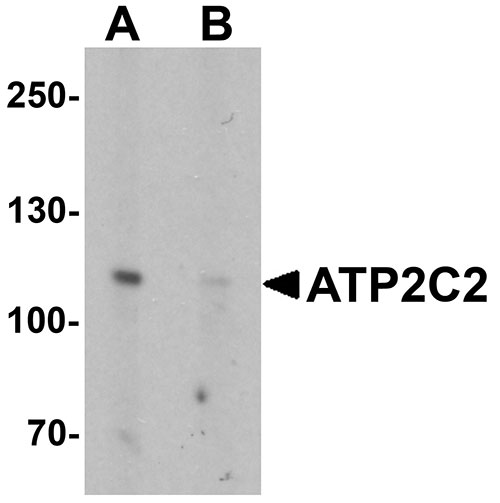
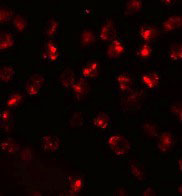
| Application Notes | ATP2C2 antibody can be used for detection of ATP2C2 by Western blot at 1 µg/mL. Antibody can also be used for immunofluorescence starting at 20 µg/mL. For immunofluorescence start at 20 µg/mL. |
| Gene ID | 9914 |
|---|---|
| Other Names | Calcium-transporting ATPase type 2C member 2, ATPase 2C2, 3.6.3.8, Secretory pathway Ca(2+)-ATPase 2, ATP2C2, KIAA0703, SPCA2 |
| Target/Specificity | ATP2C2; At least three isoforms of ATP2C2 are known to exist. ATP2C2 antibody will not cross-react with ATP2C1 |
| Reconstitution & Storage | ATP2C2 antibody can be stored at 4℃ for three months and -20℃, stable for up to one year. As with all antibodies care should be taken to avoid repeated freeze thaw cycles. Antibodies should not be exposed to prolonged high temperatures. |
| Precautions | ATP2C2 Antibody is for research use only and not for use in diagnostic or therapeutic procedures. |
For Research Use Only. Not For Use In Diagnostic Procedures.
| Name | ATP2C2 (HGNC:29103) |
|---|---|
| Synonyms | KIAA0703, SPCA2 |
| Function | ATP-driven pump that supplies the Golgi apparatus with Ca(2+) and Mn(2+) ions, both essential cofactors for processing and trafficking of newly synthesized proteins in the secretory pathway (PubMed:15677451, PubMed:15831496, PubMed:16332677, PubMed:30923126). Within a catalytic cycle, acquires Ca(2+) or Mn(2+) ions on the cytoplasmic side of the membrane and delivers them to the lumenal side. The transfer of ions across the membrane is coupled to ATP hydrolysis and is associated with a transient phosphorylation that shifts the pump conformation from inward-facing to outward-facing state (PubMed:15831496, PubMed:16332677). Induces Ca(2+) influx independently of its ATP-driven pump function. At the basolateral membrane of mammary epithelial cells, interacts with Ca(2+) channel ORAI1 and mediates Ca(2+) entry independently of the Ca(2+) content of endoplasmic reticulum or Golgi stores. May facilitate transepithelial transport of large quantities of Ca(2+) for milk secretion via activation of Ca(2+) influx channels at the plasma membrane and active Ca(2+) transport at the Golgi apparatus (PubMed:20887894, PubMed:23840669). |
| Cellular Location | Golgi apparatus, trans-Golgi network membrane; Multi-pass membrane protein. Cell membrane; Multi-pass membrane protein. Basolateral cell membrane {ECO:0000250|UniProtKB:A7L9Z8}; Multi-pass membrane protein |
| Tissue Location | Highly expressed in the gastrointestinal and respiratory tracts, prostate, thyroid, salivary, and mammary glands (PubMed:15831496). Expressed in colon epithelial cells (at protein level). Expressed in brain and testis (at protein level) (PubMed:15677451). |
Provided below are standard protocols that you may find useful for product applications.
BACKGROUND
ATP2C2 Antibody: ATP2C2, also known as secretory pathway Ca2+/Mn2+-ATPase (SPCA) 2, belongs to the family of P-type cation transport ATPases. This magnesium-dependent enzyme catalyzes the hydrolysis of ATP coupled with the transport of the calcium from the cytosol to the Golgi lumen. Defects in the related gene ATP2C1 cause Hailey-Hailey disease, for which ATP2C2 does not compensate, suggesting that ATP2C2 plays other physiological roles. Unlike ATP2C1, ATP2C2 has a much more restricted expression pattern and displays a higher maximal turnover rate for overall Ca2+-ATPase reaction and a lower apparent affinity for cytosolic Ca2+ activation of phosphorylation. Overexpression of ATP2C2 in mammary tumors result a Ca2+ influx via the store-operated Ca2+ channel ORAI1 and independent of the STIM1 and STIM2 sensors.
REFERENCES
Xiang M, Mohamalawari D, and Rao R. A novel isoform of the secretory pathway Ca2+,Mn(2+)-ATPase, hSPCA2, has unusual properties and is expressed in the brain. J. Biol. Chem. 2005; 280:11608-14.
Hu Z, Bonifas JM, Beech J, et al. Mutations in ATP2C1, encoding a calcium pump, cause Hailey-Hailey disease. Nat. Genet. 2000; 24:61-5
Dode L, Andersen JP, Vanoevelen J, et al. Dissection of the functional differences between human secretory pathway Ca2+/Mn2+-ATPase (SPCA) 1 and 2 isoenzymes by steady-state and transient kinetic analyses. J. Biol. Chem. 281:3182-9.

终于等到您。ABCEPTA(百远生物)抗体产品。
点击下方“我要评价 ”按钮提交您的反馈信息,您的反馈和评价是我们最宝贵的财富之一,
我们将在1-3个工作日内处理您的反馈信息。
如有疑问,联系:0512-88856768 tech-china@abcepta.com.


