


 癌症的基本特征包括细胞增殖、血管生成、迁移、凋亡逃避机制和细胞永生等。找到癌症发生过程中这些通路的关键标记物和对应的抗体用于检测至关重要。
 为您推荐一个泛素化位点预测神器——泛素化分析工具,可以为您的蛋白的泛素化位点作出预测和评分。
 细胞自噬受体图形绘图工具为你的蛋白的细胞受体结合位点作出预测和评分,识别结合到自噬通路中的蛋白是非常重要的,便于让我们理解自噬在正常生理、病理过程中的作用,如发育、细胞分化、神经退化性疾病、压力条件下、感染和癌症。
USP25 Antibody
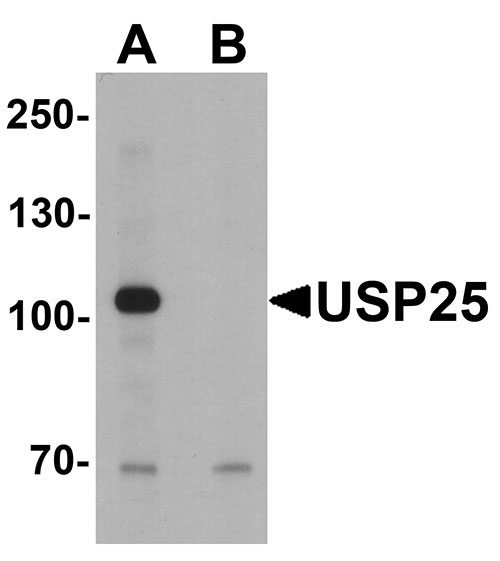
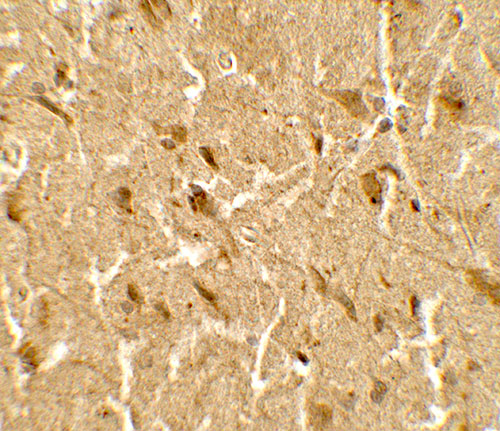
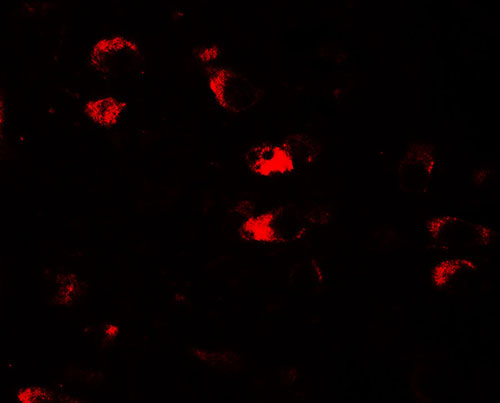
- 产品详情
- 实验流程
- 背景知识
Application 
| WB, IF, E, IHC-P |
|---|---|
| Primary Accession | Q9UHP3 |
| Other Accession | NP_037528, 50312666 |
| Reactivity | Human, Mouse |
| Host | Rabbit |
| Clonality | Polyclonal |
| Isotype | IgG |
| Calculated MW | 122218 Da |
| Concentration (mg/ml) | 1 mg/mL |
| Conjugate | Unconjugated |
| Application Notes | USP25 antibody can be used for detection of USP25 by Western blot at 1 - 2 µg/ml. Antibody can also be used for Immunohistochemistry at 5 µg/mL. For Immunoflorescence start at 20 µg/mL. |
| Gene ID | 29761 |
|---|---|
| Other Names | Ubiquitin carboxyl-terminal hydrolase 25, 3.4.19.12, Deubiquitinating enzyme 25, USP on chromosome 21, Ubiquitin thioesterase 25, Ubiquitin-specific-processing protease 25, USP25, USP21 |
| Target/Specificity | USP25; USP25 antibody is human and mouse reactive. Multiple isoforms of USP25 are known to exist. |
| Reconstitution & Storage | USP25 antibody can be stored at 4℃ for three months and -20℃, stable for up to one year. |
| Precautions | USP25 Antibody is for research use only and not for use in diagnostic or therapeutic procedures. |
For Research Use Only. Not For Use In Diagnostic Procedures.
| Name | USP25 |
|---|---|
| Synonyms | USP21 |
| Function | Deubiquitinating enzyme that hydrolyzes ubiquitin moieties conjugated to substrates and thus, functions in various biological processes including inflammation and immune response (PubMed:29518389, PubMed:37683630). Modulates the Wnt/beta-catenin pathway by deubiquitinating and stabilizing tankyrases TNKS1 and TNKS2 (PubMed:28619731, PubMed:30926243, PubMed:38875478). Regulates KEAP1- NRF2 axis in the defense against oxidative assaults by deubiquitinating KEAP1 and protecting it from degradation leading to degradation of the NRF2 transcription factor that is responsible for mounting an anti- oxidation gene expression program (PubMed:37339955). Positively regulates RNA virus-induced innate signaling by interacting with and deubiquitinating ERLIN1 and ERLIN2 (PubMed:37683630). In turn, restricts virus production by regulating cholesterol biosynthetic flux (PubMed:37683630). Acts as a negative regulator of interleukin-17- mediated signaling and inflammation through the removal of 'Lys-63'- linked ubiquitination of TRAF5 and TRAF6 (PubMed:23042150). Prevents the ubiquitination and degradation of TRAF3 to reduce the phosphorylation levels of JNK and P38, the secretion of IL-1B and to induce endotoxin tolerance (PubMed:30579117). |
| Cellular Location | Cytoplasm |
| Tissue Location | Isoform USP25a is found in most adult and fetal tissues; expression is moderately high in testis, pancreas, kidney, skeletal muscle, liver, lung, placenta, heart, but very low in peripheral blood, colon, small intestine, ovary, prostate, thymus and spleen. Expressed in the brain, with high levels in the cerebral cortex (PubMed:38875478). Isoform USP25b is found in all tissues except heart and skeletal muscle. Isoform USP25m is heart and skeletal muscle specific. |
Provided below are standard protocols that you may find useful for product applications.
BACKGROUND
USP25 (ubiquitin specific peptidase 25), also known as USP21, belongs to the peptidase C19 family and is a highly conserved 76-amino acid protein involved in regulation of intracellular protein breakdown, cell cycle regulation, and stress response (1). It contains one UBA-like domain and two UIM (ubiquitin-interacting motif) repeats. Due to alternative splicing events, USP25 is expressed as two short, ubiquitously expressed isoforms and one long, muscle-specific isoform (2). The long isoform of USP25 (USP25m) is upregulated in myogenesis and is implicated in regulation of muscular differentiation and function. USP25 is a deubiquitinating enzyme (DUB) that negatively regulates IL-17-triggered signaling (3,4).
REFERENCES
Valero R, Marfany G, Gonzalez-Angulo O, et al. USP25, a novel gene encoding a deubiquitinating enzyme, is located in the gene-poor region 21q11.2. Genomics 1999; 62:395-405.
Valero R, Bayes M, Francisca Sanchez-Font M, et al. Characterization of alternatively spliced products and tissue-specific isoforms of USP28 and USP25. Genome Biol. 2001; 2: RESEARCH0043.
Zhong B, Liu X, Wang X, et al. Negative regulation of IL-17-mediated signaling and inflammation by the ubiquitin-specific protease USP25. Nat. Immunol. 2012; 13:1110-7.
Zhong B, Liu X, Wang X, et al. Ubiquitin-specific protease 25 regulates TLR4-dependent innate immune responses through deubiquitination of the adaptor protein TRAF3. Sci. Signal. 2013; 6:ra35.

终于等到您。ABCEPTA(百远生物)抗体产品。
点击下方“我要评价 ”按钮提交您的反馈信息,您的反馈和评价是我们最宝贵的财富之一,
我们将在1-3个工作日内处理您的反馈信息。
如有疑问,联系:0512-88856768 tech-china@abcepta.com.


