


 癌症的基本特征包括细胞增殖、血管生成、迁移、凋亡逃避机制和细胞永生等。找到癌症发生过程中这些通路的关键标记物和对应的抗体用于检测至关重要。
 为您推荐一个泛素化位点预测神器——泛素化分析工具,可以为您的蛋白的泛素化位点作出预测和评分。
 细胞自噬受体图形绘图工具为你的蛋白的细胞受体结合位点作出预测和评分,识别结合到自噬通路中的蛋白是非常重要的,便于让我们理解自噬在正常生理、病理过程中的作用,如发育、细胞分化、神经退化性疾病、压力条件下、感染和癌症。
SLC29A4 Antibody
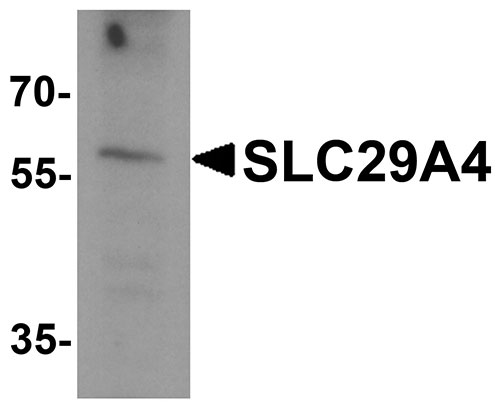
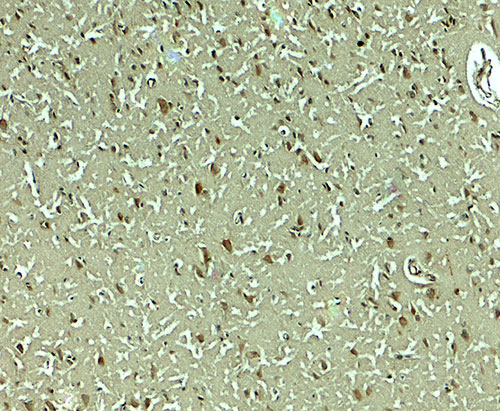
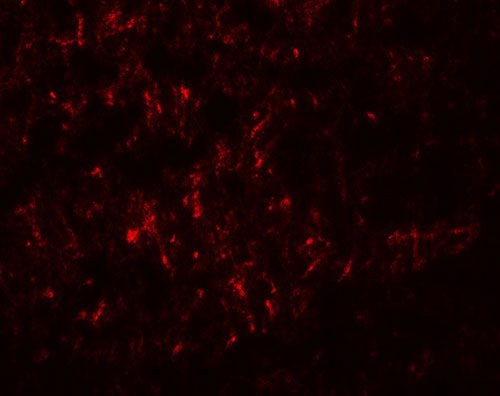
- 产品详情
- 实验流程
- 背景知识
Application 
| WB, IF, E, IHC-P |
|---|---|
| Primary Accession | Q7RTT9 |
| Other Accession | NP_001035751, 100913034 |
| Reactivity | Human |
| Host | Rabbit |
| Clonality | Polyclonal |
| Isotype | IgG |
| Calculated MW | 58059 Da |
| Concentration (mg/ml) | 1 mg/mL |
| Conjugate | Unconjugated |
| Application Notes | SLC29A4 antibody can be used for detection of SLC29A4 by Western blot at 1 - 2 µg/mL. Antibody can also be used for immunohistochemistry starting at 5 µg/mL. For immunofluorescence start at 20 µg/mL. |
| Gene ID | 222962 |
|---|---|
| Other Names | Equilibrative nucleoside transporter 4, hENT4, Plasma membrane monoamine transporter, Solute carrier family 29 member 4, SLC29A4, ENT4, PMAT |
| Target/Specificity | SLC29A4; SLC29A4 antibody is human specific. SLC29A4 antibody is predicted to not cross-react with other SLC29 proteins. |
| Reconstitution & Storage | SLC29A4 antibody can be stored at 4℃ for three months and -20℃, stable for up to one year. |
| Precautions | SLC29A4 Antibody is for research use only and not for use in diagnostic or therapeutic procedures. |
For Research Use Only. Not For Use In Diagnostic Procedures.
| Name | SLC29A4 (HGNC:23097) |
|---|---|
| Synonyms | ENT4, PMAT |
| Function | Electrogenic voltage-dependent transporter that mediates the transport of a variety of endogenous bioactive amines, cationic xenobiotics and drugs (PubMed:15448143, PubMed:16099839, PubMed:16873718, PubMed:17018840, PubMed:17121826, PubMed:20592246, PubMed:20858707, PubMed:22396231, PubMed:31537831). Utilizes the physiologic inside-negative membrane potential as a driving force to facilitate cellular uptake of organic cations (PubMed:15448143, PubMed:20592246, PubMed:22396231). Functions as a Na(+)- and Cl(-)- independent bidirectional transporter (PubMed:15448143, PubMed:16099839, PubMed:22396231, PubMed:31537831). Substrate transport is pH-dependent and enhanced under acidic condition, which is most likely the result of allosteric changes in the transporter structure (PubMed:16873718, PubMed:17018840, PubMed:20592246, PubMed:22396231, PubMed:31537831). Implicated in monoamine neurotransmitters uptake such as serotonin, dopamine, adrenaline/epinephrine, noradrenaline/norepinephrine, histamine and tyramine, thereby supporting a role in homeostatic regulation of aminergic neurotransmission in the central nervous system (PubMed:15448143, PubMed:16099839, PubMed:17018840, PubMed:17121826, PubMed:20858707, PubMed:22396231). Also responsible for the uptake of bioactive amines and drugs through the blood-cerebrospinal fluid (CSF) barrier, from the CSF into choroid plexus epithelial cells, thereby playing a significant role in the clearance of cationic neurotoxins, xenobiotics and metabolic waste in the brain (By similarity). Involved in bidirectional transport of the purine nucleoside adenosine and plays a role in the regulation of extracellular adenosine concentrations in cardiac tissues, in particular during ischemia (PubMed:16873718, PubMed:20592246, PubMed:31537831). May be involved in organic cation uptake from the tubular lumen into renal tubular cells, thereby contributing to organic cation reabsorption in the kidney (PubMed:17018840). Also transports guanidine (PubMed:16099839). |
| Cellular Location | Cell membrane; Multi-pass membrane protein. Apical cell membrane; Multi-pass membrane protein. Note=Located to the plasma membranes of ventricular myocytes and vascular endothelial cells (PubMed:16873718). Targeted to the apical membranes of differentiated kidney epithelial cells (PubMed:17018840). Localized to the apical blood-cerebrospinal fluid (CSF)-facing membrane of the choroid plexus epithelium (PubMed:23255610). |
| Tissue Location | Mainly expressed in brain and skeletal muscle (PubMed:15448143, PubMed:16873718, PubMed:20592246, PubMed:20858707) In brain, expressed in cerebellum, cerebral cortex, medulla oblongata, occipital pole, frontal and temporal lobes putamen, spinal cord, substancia nigra, hippocampus, caudate nucleus, nucleus accumbens, pons and choroid plexus (PubMed:15448143, PubMed:16873718, PubMed:20858707, PubMed:23255610). Expressed in heart, in both cardiomyocytes and vascular endothelial cells (PubMed:15448143, PubMed:16873718, PubMed:20858707). Also expressed in adrenal gland, small intestine, pancreas, kidney, liver, bone marrow, lymph node (PubMed:15448143, PubMed:16873718, PubMed:17018840, PubMed:20858707). Located in endometrial stroma, where the expression is high in the proliferative phase, decreases during the secretory phase, and is no longer detectable in the menstrual phase (PubMed:17393420) |
Provided below are standard protocols that you may find useful for product applications.
BACKGROUND
SLC29A4 is a member of the equilibrative nucleoside transporter family which plays a key role in nucleoside and nucleobase uptake for salvage pathways of nucleotide synthesis (1,2). SLC29A4 is a transmembrane protein that catalyzes the reuptake of monoamines into presynaptic neurons, thus determining the intensity and duration of monoamine neural signaling (1,3). SLC29A4 has been shown to transport several compounds, including serotonin, dopamine, and the neurotoxin 1-methyl-4-phenylpyridinium (3).
REFERENCES
Engel K, Zhou M, and Wang J. Identification and characterization of a novel monomine transporter in the human brain. J. Biol. Chem. 2004; 279:50042-9.
Young JD, Yao SY, Baldwin JM, et al. The human concentrative and equilibrative nucleoside transporter families, SLC28 and SLC29. Mol. Aspects. Med. 34:529-47.
Duan H and Wang J. Selective transport of monoamine neurotransmitters by human plasma membrane monoamine transporter and organic cation transporter 3. J. Pharmacol. Exp. Ther. 2010; 335:743-53.

终于等到您。ABCEPTA(百远生物)抗体产品。
点击下方“我要评价 ”按钮提交您的反馈信息,您的反馈和评价是我们最宝贵的财富之一,
我们将在1-3个工作日内处理您的反馈信息。
如有疑问,联系:0512-88856768 tech-china@abcepta.com.


