


 癌症的基本特征包括细胞增殖、血管生成、迁移、凋亡逃避机制和细胞永生等。找到癌症发生过程中这些通路的关键标记物和对应的抗体用于检测至关重要。
 为您推荐一个泛素化位点预测神器——泛素化分析工具,可以为您的蛋白的泛素化位点作出预测和评分。
 细胞自噬受体图形绘图工具为你的蛋白的细胞受体结合位点作出预测和评分,识别结合到自噬通路中的蛋白是非常重要的,便于让我们理解自噬在正常生理、病理过程中的作用,如发育、细胞分化、神经退化性疾病、压力条件下、感染和癌症。
Anti-Elastase/ELANE/ELA2 Picoband Antibody
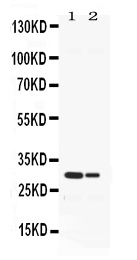
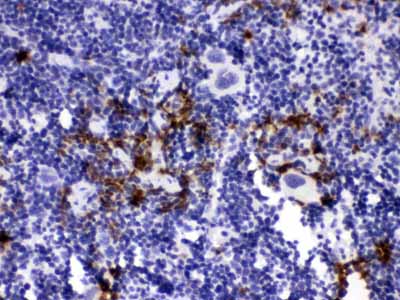
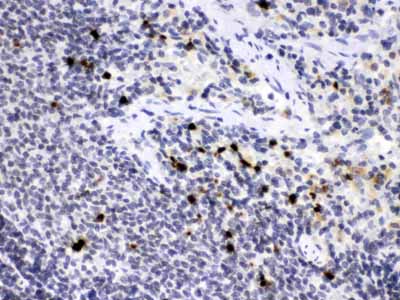
- 产品详情
- 实验流程
- 背景知识
Application 
| WB, IHC-P |
|---|---|
| Primary Accession | Q3UP87 |
| Host | Rabbit |
| Reactivity | Mouse, Rat |
| Clonality | Polyclonal |
| Format | Lyophilized |
| Description | Rabbit IgG polyclonal antibody for Neutrophil elastase(ELANE) detection. Tested with WB, IHC-P in Mouse;Rat. |
| Reconstitution | Add 0.2ml of distilled water will yield a concentration of 500ug/ml. |
| Gene ID | 50701 |
|---|---|
| Other Names | Neutrophil elastase, 3.4.21.37, Elastase-2, Leukocyte elastase, Elane, Ela2 |
| Calculated MW | 28648 Da |
| Application Details | Immunohistochemistry(Paraffin-embedded Section), 0.5-1 µg/ml, Mouse, Rat, By Heat Western blot, 0.1-0.5 µg/ml, Mouse |
| Source | Eukaryota |
| Protein Name | Neutrophil elastase |
| Contents | Each vial contains 5mg BSA, 0.9mg NaCl, 0.2mg Na2HPO4, 0.05mg NaN3. |
| Immunogen | E. coli-derived mouse Elastase/ELANE/ELA2 recombinant protein (Position: S27-N265). Mouse Elastase/ELANE/ELA2 shares 92% amino acid (aa) sequence identity with rat Elastase/ELANE/ELA2. |
| Purification | Immunogen affinity purified. |
| Cross Reactivity | No cross reactivity with other proteins |
| Storage | At -20˚C for one year. After r˚Constitution, at 4˚C for one month. It˚Can also be aliquotted and stored frozen at -20˚C for a longer time.Avoid repeated freezing and thawing. |
For Research Use Only. Not For Use In Diagnostic Procedures.
| Name | Elane |
|---|---|
| Synonyms | Ela2 |
| Function | Serine protease that modifies the functions of natural killer cells, monocytes and granulocytes (PubMed:10947984). Shows microbicidal activity in neutrophils by mediating cleavage and degradation of bacterial proteins (By similarity). Capable of killing E.coli but not S.aureus in vitro; digests outer membrane protein A (ompA) in E.coli and K.pneumoniae (PubMed:10947984). Involved for the formation of neutrophil extracellular traps (NETs): translocates into the nucleus downstream of MPO and mediates degadation of histone H4, thereby participating to chromatin decondensation (PubMed:20974816, PubMed:32045782). NETs are mainly composed of DNA fibers and are released by neutrophils to trap pathogens during inflammation (By similarity). Inhibits C5a-dependent neutrophil enzyme release and chemotaxis (By similarity). Promotes cleavage of GSDMB, thereby inhibiting pyroptosis (By similarity). Promotes blood coagulation (PubMed:20676107). Through the activation of the platelet fibrinogen receptor integrin alpha-IIb/beta-3, potentiates platelet aggregation induced by a threshold concentration of cathepsin G (CTSG) (By similarity). Cleaves and thus inactivates tissue factor pathway inhibitor (TFPI) (By similarity). |
| Cellular Location | Cytoplasmic vesicle, phagosome {ECO:0000250|UniProtKB:P08246}. Lysosome {ECO:0000250|UniProtKB:P08246}. Cytolytic granule {ECO:0000250|UniProtKB:P08246}. Nucleus {ECO:0000250|UniProtKB:P08246} Note=Localizes to azurophil granules, a type of primary lysosome found in neutrophils and monocytes that contains antimicrobial proteins (By similarity). Translocates from azurophil granules to the nucleus downstream of MPO during formation of neutrophil extracellular traps (NETs), and is present in released NETs (PubMed:32045782). Localized in phagolysosomes following ingestion of E.coli by neutrophils (By similarity). {ECO:0000250|UniProtKB:P08246, ECO:0000269|PubMed:32045782} |
Provided below are standard protocols that you may find useful for product applications.
BACKGROUND
Neutrophil elastase is a serine protease of neutrophil and monocyte granules. Its key physiologic role is in innate host defense, but it can also participate in tissue remodeling and possesses secretagogue actions important to local inflammatory responses. Elastases form a subfamily of serine proteases that hydrolyze many proteins in addition to elastin. Humans have six elastase genes which encode structurally similar proteins. The encoded preproprotein is proteolytically processed to generate the active protease. Following activation, this protease hydrolyzes proteins within specialized neutrophil lysosomes, called azurophil granules, as well as proteins of the extracellular matrix. This protein also degrades the outer membrane protein A (OmpA) of E. coli as well as the virulence factors of such bacteria as Shigella, Salmonella and Yersinia. Mutations in this gene are associated with cyclic neutropenia and severe congenital neutropenia (SCN). This gene is present in a gene cluster on chromosome 19.

终于等到您。ABCEPTA(百远生物)抗体产品。
点击下方“我要评价 ”按钮提交您的反馈信息,您的反馈和评价是我们最宝贵的财富之一,
我们将在1-3个工作日内处理您的反馈信息。
如有疑问,联系:0512-88856768 tech-china@abcepta.com.


