


 癌症的基本特征包括细胞增殖、血管生成、迁移、凋亡逃避机制和细胞永生等。找到癌症发生过程中这些通路的关键标记物和对应的抗体用于检测至关重要。
 为您推荐一个泛素化位点预测神器——泛素化分析工具,可以为您的蛋白的泛素化位点作出预测和评分。
 细胞自噬受体图形绘图工具为你的蛋白的细胞受体结合位点作出预测和评分,识别结合到自噬通路中的蛋白是非常重要的,便于让我们理解自噬在正常生理、病理过程中的作用,如发育、细胞分化、神经退化性疾病、压力条件下、感染和癌症。
Anti-KIAA1967 Antibody (3G4-D11-D7)
Mouse Monoclonal Antibody
- 产品详情
- 实验流程
- 背景知识
Application 
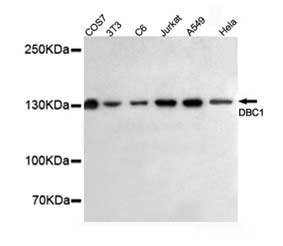
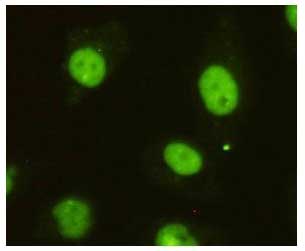
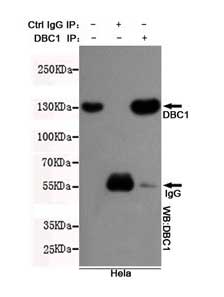
| WB, IF, IP |
|---|---|
| Primary Accession | Q8N163 |
| Reactivity | Human, Mouse, Rat, Monkey |
| Host | Mouse |
| Clonality | Monoclonal |
| Isotype | Mouse IgG1 |
| Clone Names | 3G4-D11-D7 |
| Calculated MW | 102902 Da |
| Gene ID | 57805 |
|---|---|
| Application & Usage | WB: HeLa, A549, Jurkat, C6, 3T3 and COS7 cell lysates; IF: HeLa cells; IP: HeLa cells |
| Other Names | Cell cycle and apoptosis regulator protein 2, Cell division cycle and apoptosis regulator protein 2, DBIRD complex subunit KIAA1967, Deleted in breast cancer gene 1 protein, DBC1, NET35, p30 DBC |
| Target/Specificity | Cell cycle and apoptosis regulator protein 2 |
| Antibody Form | Liquid |
| Appearance | Colorless liquid |
| Formulation | In buffer containing 0.1M Tris-Glycine (pH 7.4, 150 mM NaCl) with 0.2% sodium azide, 50% glycerol |
| Handling | The antibody solution should be gently mixed before use. |
| Reconstitution & Storage | -20 °C |
| Background Descriptions | |
| Precautions | Anti-KIAA1967 Antibody (3G4-D11-D7) is for research use only and not for use in diagnostic or therapeutic procedures. |
For Research Use Only. Not For Use In Diagnostic Procedures.
| Name | CCAR2 |
|---|---|
| Synonyms | DBC1, KIAA1967 |
| Function | Core component of the DBIRD complex, a multiprotein complex that acts at the interface between core mRNP particles and RNA polymerase II (RNAPII) and integrates transcript elongation with the regulation of alternative splicing: the DBIRD complex affects local transcript elongation rates and alternative splicing of a large set of exons embedded in (A + T)-rich DNA regions (PubMed:22446626). Inhibits SIRT1 deacetylase activity leading to increasing levels of p53/TP53 acetylation and p53-mediated apoptosis (PubMed:18235501, PubMed:18235502, PubMed:23352644). Inhibits SUV39H1 methyltransferase activity (PubMed:19218236). Mediates ligand-dependent transcriptional activation by nuclear hormone receptors (PubMed:19131338). Plays a critical role in maintaining genomic stability and cellular integrity following UV-induced genotoxic stress (PubMed:23398316). Regulates the circadian expression of the core clock components NR1D1 and BMAL1 (PubMed:23398316). Enhances the transcriptional repressor activity of NR1D1 through stabilization of NR1D1 protein levels by preventing its ubiquitination and subsequent degradation (PubMed:23398316). Represses the ligand-dependent transcriptional activation function of ESR2 (PubMed:20074560). Acts as a regulator of PCK1 expression and gluconeogenesis by a mechanism that involves, at least in part, both NR1D1 and SIRT1 (PubMed:24415752). Negatively regulates the deacetylase activity of HDAC3 and can alter its subcellular localization (PubMed:21030595). Positively regulates the beta-catenin pathway (canonical Wnt signaling pathway) and is required for MCC-mediated repression of the beta-catenin pathway (PubMed:24824780). Represses ligand-dependent transcriptional activation function of NR1H2 and NR1H3 and inhibits the interaction of SIRT1 with NR1H3 (PubMed:25661920). Plays an important role in tumor suppression through p53/TP53 regulation; stabilizes p53/TP53 by affecting its interaction with ubiquitin ligase MDM2 (PubMed:25732823). Represses the transcriptional activator activity of BRCA1 (PubMed:20160719). Inhibits SIRT1 in a CHEK2 and PSEM3-dependent manner and inhibits the activity of CHEK2 in vitro (PubMed:25361978). |
| Cellular Location | Nucleus. Cytoplasm. Cytoplasm, cytoskeleton, spindle. Note=Recruited to chromatin, post-UV irradiation. Sequestered to the cytoplasm in the presence of MCC. Translocated to the cytoplasm during UV-induced apoptosis. |
| Tissue Location | Expressed in gastric carcinoma tissue and the expression gradually increases with the progression of the carcinoma (at protein level). Expressed ubiquitously in normal tissues. Expressed in 84 to 100% of neoplastic breast, lung, and colon tissues |
Provided below are standard protocols that you may find useful for product applications.
BACKGROUND
Core component of the DBIRD complex, a multiprotein complex that acts at the interface between core mRNP particles and RNA polymerase II (RNAPII) and integrates transcript elongation with the regulation of alternative splicing: the DBIRD complex affects local transcript elongation rates and alternative splicing of a large set of exons embedded in (A + T)-rich DNA regions. Inhibits SIRT1 deacetylase activity leading to increasing levels of p53/TP53 acetylation and p53-mediated apoptosis. Inhibits SUV39H1 methyltransferase activity. As part of a histone H3-specific methyltransferase complex may mediate ligand-dependent transcriptional activation by nuclear hormone receptors.

终于等到您。ABCEPTA(百远生物)抗体产品。
点击下方“我要评价 ”按钮提交您的反馈信息,您的反馈和评价是我们最宝贵的财富之一,
我们将在1-3个工作日内处理您的反馈信息。
如有疑问,联系:0512-88856768 tech-china@abcepta.com.


