


 癌症的基本特征包括细胞增殖、血管生成、迁移、凋亡逃避机制和细胞永生等。找到癌症发生过程中这些通路的关键标记物和对应的抗体用于检测至关重要。
 为您推荐一个泛素化位点预测神器——泛素化分析工具,可以为您的蛋白的泛素化位点作出预测和评分。
 细胞自噬受体图形绘图工具为你的蛋白的细胞受体结合位点作出预测和评分,识别结合到自噬通路中的蛋白是非常重要的,便于让我们理解自噬在正常生理、病理过程中的作用,如发育、细胞分化、神经退化性疾病、压力条件下、感染和癌症。
DPP4/CD26 Rabbit pAb
DPP4/CD26 Rabbit pAb
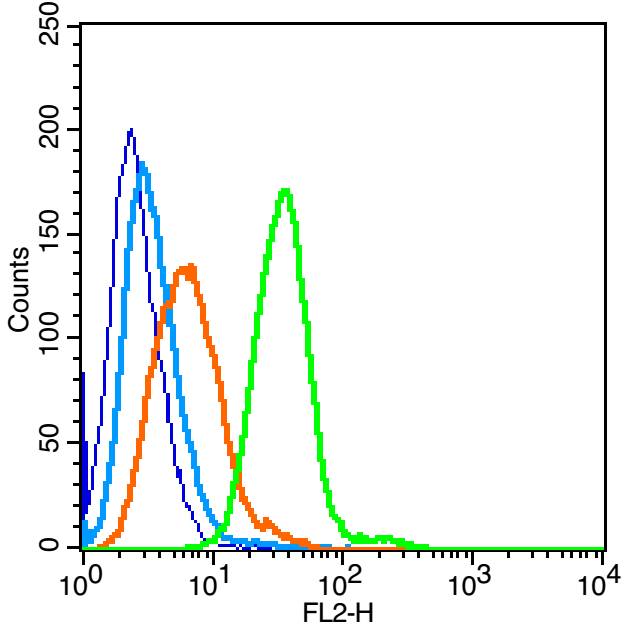
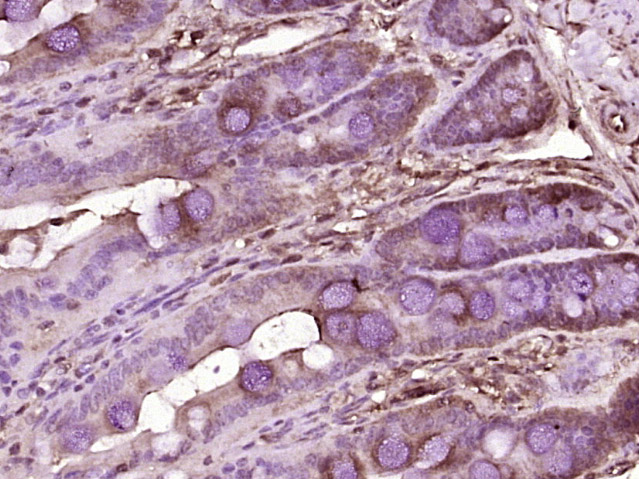
- 产品详情
- 实验流程
- 背景知识
| Primary Accession | P27487 |
|---|---|
| Reactivity | Human |
| Host | Rabbit |
| Clonality | Polyclonal |
| Calculated MW | 88279 Da |
| Physical State | Liquid |
| Immunogen | KLH conjugated synthetic peptide derived from human CD26 |
| Epitope Specificity | 661-766/766 |
| Isotype | IgG |
| Purity | affinity purified by Protein A |
| Buffer | 0.01M TBS (pH7.4) with 1% BSA, 0.02% Proclin300 and 50% Glycerol. |
| SUBCELLULAR LOCATION | Cell membrane. Apical cell membrane. Cell projection > invadopodium membrane. Cell projection > lamellipodium membrane. Cell junction. Membrane raft. Translocated to the apical membrane through the concerted action of N- and O-Glycans and its association with lipid microdomains containing cholesterol and sphingolipids. Redistributed to membrane rafts in T-cell in a interleukin-12-dependent activation. Its interaction with CAV1 is necessary for its translocation to membrane rafts. Colocalized with PTPRC in membrane rafts. Colocalized with FAP in invadopodia and lamellipodia of migratory activated endothelial cells in collagenous matrix. Colocalized with FAP on endothelial cells of capillary-like microvessels but not large vessels within invasive breast ductal carcinoma. Colocalized with ADA at the cell junction in lymphocyte-epithelial cell adhesion. Colocalized with IGF2R in internalized cytoplasmic vesicles adjacent to the cell surface and Secreted. Detected in the serum and the seminal fluid. |
| Important Note | This product as supplied is intended for research use only, not for use in human, therapeutic or diagnostic applications. |
| Background Descriptions | The DPP4 gene encodes dipeptidyl peptidase 4, which is identical to adenosine deaminase complexing protein-2, and to the T-cell activation antigen CD26. It is an intrinsic type II transmembrane glycoprotein and a serine exopeptidase that cleaves X-proline dipeptides from the N-terminus of polypeptides. Dipeptidyl peptidase 4 is highly involved in glucose and insulin metabolism, as well as in immune regulation. This protein was shown to be a functional receptor for Middle East respiratory syndrome coronavirus (MERS-CoV), and protein modeling suggests that it may play a similar role with SARS-CoV-2, the virus responsible for COVID-19. [provided by RefSeq, Apr 2020] |
| Gene ID | 1803 |
|---|---|
| Other Names | Dipeptidyl peptidase 4, 3.4.14.5, ADABP, Adenosine deaminase complexing protein 2, ADCP-2, Dipeptidyl peptidase IV, DPP IV, T-cell activation antigen CD26, TP103, CD26, Dipeptidyl peptidase 4 membrane form, Dipeptidyl peptidase IV membrane form, Dipeptidyl peptidase 4 soluble form, Dipeptidyl peptidase IV soluble form, DPP4 (HGNC:3009), ADCP2, CD26 |
| Dilution | ICC/IF=1:50-200 |
| Storage | Store at -20 °C for one year. Avoid repeated freeze/thaw cycles. When reconstituted in sterile pH 7.4 0.01M PBS or diluent of antibody the antibody is stable for at least two weeks at 2-4 °C. |
For Research Use Only. Not For Use In Diagnostic Procedures.
| Name | DPP4 (HGNC:3009) |
|---|---|
| Synonyms | ADCP2, CD26 |
| Function | Cell surface glycoprotein receptor involved in the costimulatory signal essential for T-cell receptor (TCR)-mediated T- cell activation (PubMed:10900005, PubMed:10951221, PubMed:11772392, PubMed:17287217). Acts as a positive regulator of T-cell coactivation, by binding at least ADA, CAV1, IGF2R, and PTPRC (PubMed:10900005, PubMed:10951221, PubMed:11772392, PubMed:14691230). Its binding to CAV1 and CARD11 induces T-cell proliferation and NF-kappa-B activation in a T-cell receptor/CD3-dependent manner (PubMed:17287217). Its interaction with ADA also regulates lymphocyte-epithelial cell adhesion (PubMed:11772392). In association with FAP is involved in the pericellular proteolysis of the extracellular matrix (ECM), the migration and invasion of endothelial cells into the ECM (PubMed:10593948, PubMed:16651416). May be involved in the promotion of lymphatic endothelial cells adhesion, migration and tube formation (PubMed:18708048). When overexpressed, enhanced cell proliferation, a process inhibited by GPC3 (PubMed:17549790). Also acts as a serine exopeptidase with a dipeptidyl peptidase activity that regulates various physiological processes by cleaving peptides in the circulation, including many chemokines, mitogenic growth factors, neuropeptides and peptide hormones such as brain natriuretic peptide 32 (PubMed:10570924, PubMed:16254193). Removes N-terminal dipeptides sequentially from polypeptides having unsubstituted N-termini provided that the penultimate residue is proline (PubMed:10593948). |
| Cellular Location | [Dipeptidyl peptidase 4 soluble form]: Secreted Note=Detected in the serum and the seminal fluid |
| Tissue Location | Expressed specifically in lymphatic vessels but not in blood vessels in the skin, small intestine, esophagus, ovary, breast and prostate glands. Not detected in lymphatic vessels in the lung, kidney, uterus, liver and stomach (at protein level). Expressed in the poorly differentiated crypt cells of the small intestine as well as in the mature villous cells. Expressed at very low levels in the colon |
Provided below are standard protocols that you may find useful for product applications.
BACKGROUND
This product as supplied is intended for research use only, not for use in human, therapeutic or diagnostic applications.
REFERENCES
Misumi Y.,et al.Biochim. Biophys. Acta 1131:333-336(1992).
Darmoul D.,et al.J. Biol. Chem. 267:4824-4833(1992).
Tanaka T.,et al.J. Immunol. 149:481-486(1992).
Tanaka T.,et al.J. Immunol. 150:2090-2090(1993).
Abbott C.A.,et al.Immunogenetics 40:331-338(1994).

终于等到您。ABCEPTA(百远生物)抗体产品。
点击下方“我要评价 ”按钮提交您的反馈信息,您的反馈和评价是我们最宝贵的财富之一,
我们将在1-3个工作日内处理您的反馈信息。
如有疑问,联系:0512-88856768 tech-china@abcepta.com.


