


 癌症的基本特征包括细胞增殖、血管生成、迁移、凋亡逃避机制和细胞永生等。找到癌症发生过程中这些通路的关键标记物和对应的抗体用于检测至关重要。
 为您推荐一个泛素化位点预测神器——泛素化分析工具,可以为您的蛋白的泛素化位点作出预测和评分。
 细胞自噬受体图形绘图工具为你的蛋白的细胞受体结合位点作出预测和评分,识别结合到自噬通路中的蛋白是非常重要的,便于让我们理解自噬在正常生理、病理过程中的作用,如发育、细胞分化、神经退化性疾病、压力条件下、感染和癌症。
ACADVL Rabbit pAb
ACADVL Rabbit pAb
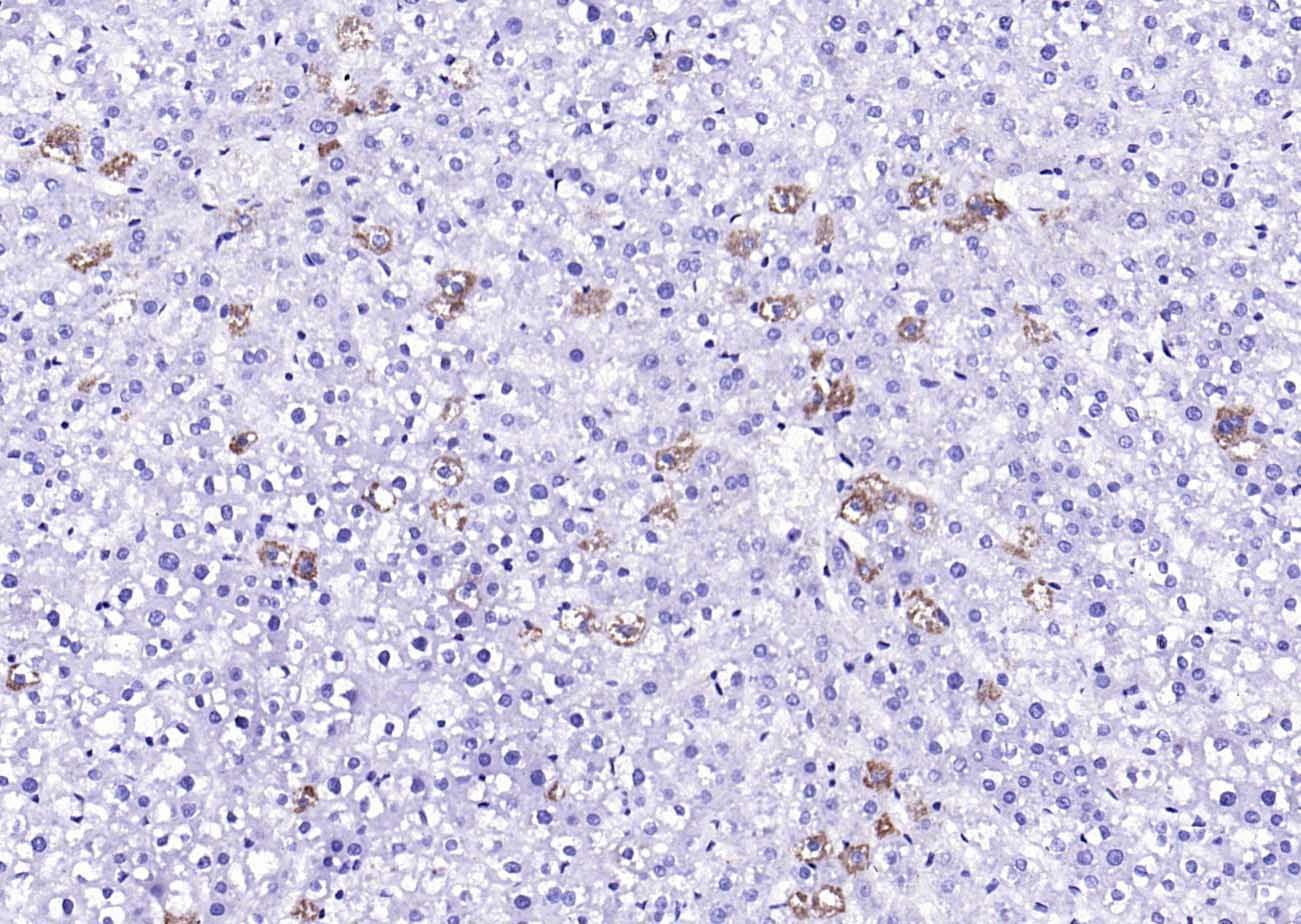
- 产品详情
- 实验流程
- 背景知识
Application 
| IHC-P, IHC-F, IF |
|---|---|
| Primary Accession | P49748 |
| Reactivity | Rat |
| Predicted | Pig, Dog, Human, Mouse, Rabbit, Horse |
| Host | Rabbit |
| Clonality | Polyclonal |
| Calculated MW | 70390 Da |
| Physical State | Liquid |
| Immunogen | KLH conjugated synthetic peptide derived from human ACADVL |
| Epitope Specificity | 251-350/655 |
| Isotype | IgG |
| Purity | affinity purified by Protein A |
| Buffer | 0.01M TBS (pH7.4) with 1% BSA, 0.02% Proclin300 and 50% Glycerol. |
| SUBCELLULAR LOCATION | Mitochondrion inner membrane. |
| DISEASE | Defects in ACADVL are the cause of acyl-CoA dehydrogenase very long chain deficiency (ACADVLD) [MIM:201475]. ACADVLD is an autosomal recessive disease which leads to impaired long-chain fatty acid beta-oxidation. It is clinically heterogeneous, with three major phenotypes: a severe childhood form, with early onset, high mortality, and high incidence of cardiomyopathy; a milder childhood form, with later onset, usually with hypoketotic hypoglycemia as the main presenting feature, low mortality, and rare cardiomyopathy; and an adult form, with isolated skeletal muscle involvement, rhabdomyolysis, and myoglobinuria, usually triggered by exercise or fasting. |
| Important Note | This product as supplied is intended for research use only, not for use in human, therapeutic or diagnostic applications. |
| Background Descriptions | ACADVL (acyl-Coenzyme A dehydrogenase, very long chain) catalyzes the first step of the mitochondrial fatty acid beta-oxidation pathway. It is specific to esters of long-chain and very long chain fatty acids such as palmitoyl-CoA and stearoyl-CoA. Deficiencies in ACADVL are associated with reduced myocardial fatty acid beta-oxidation and cardiomyopathy. |
| Gene ID | 37 |
|---|---|
| Other Names | Very long-chain acyl-CoA dehydrogenase, mitochondrial, VLCAD, 1.3.8.9, Long-chain acyl-CoA dehydrogenase, mitochondrial, 1.3.8.8, ACADVL (HGNC:92) |
| Dilution | IHC-P=1:100-500,IHC-F=1:100-500,IF=1:100-500 |
| Storage | Store at -20 °C for one year. Avoid repeated freeze/thaw cycles. When reconstituted in sterile pH 7.4 0.01M PBS or diluent of antibody the antibody is stable for at least two weeks at 2-4 °C. |
For Research Use Only. Not For Use In Diagnostic Procedures.
| Name | ACADVL (HGNC:92) |
|---|---|
| Function | Catalyzes the first of the four reactions of the mitochondrial fatty acid beta-oxidation (FAO) pathway, which consists in the proR-proR stereospecific alpha, beta-dehydrogenation of fatty acyl-CoA thioesters using the electron transfer flavoprotein (ETF) as their physiologic electron acceptor, resulting in the formation of trans-2-enoyl-CoA ((2E)-enoyl-CoA) (PubMed:17564966, PubMed:18227065, PubMed:26474213, PubMed:7668252, PubMed:9461620, PubMed:9599005, PubMed:9839948). The mitochondrial FAO pathway is the major energy- producing process in tissues and is performed through cycles of four consecutive reactions (PubMed:26474213, PubMed:7668252). Each FAO cycle shortens the fatty acyl-CoA by two carbons, yielding one acetyl-CoA (for the citric acid cycle), one FADH(2), and one NADH (which donate electrons to the respiratory chain for ATP production) (PubMed:26474213, PubMed:7668252). Among the different mitochondrial acyl-CoA dehydrogenases, very long-chain specific acyl-CoA dehydrogenase acts specifically on fatty acyl-CoAs with saturated 12 to 24 carbons long primary chains (PubMed:17564966, PubMed:21237683, PubMed:9839948), but can also catalyze monounsaturated fatty acids such as oleate ((9Z)-octadecenoate), (9Z)-hexadecenoate, and others (PubMed:17564966). Can use (4Z,7Z,10Z,13Z,16Z,19Z)-docosahexaenoate as substrate in vitro (which is not primarily used for energy but mainly beta-oxidized in the peroxisomes) (PubMed:17564966, PubMed:26474213). In addition, based on its established catalytic mechanism, and combined genetic interaction or mutant phenotype evidence, it is predicted to act also on substrates that have not been tested experimentally but are metabolized by mitochondrial FAO, including long-chain unsaturated fatty acids such as linoleate (9Z,12Z-octadecadienoate), linolenate (9Z,12Z,15Z-octadecatrienoate), and others (PubMed:26474213). Among the different mitochondrial acyl-CoA dehydrogenases, its FAO activity overlaps with that of ACAD9 and ACADL, but plays a primary role in tissues where it is the main long-chain ACAD expressed, such as the heart and skeletal muscle (PubMed:17564966). |
| Cellular Location | Mitochondrion inner membrane; Peripheral membrane protein |
| Tissue Location | Predominantly expressed in heart and skeletal muscle (at both mRNA and protein levels) (PubMed:17564966, PubMed:8845838). Also detected in kidney and liver (at protein level) (PubMed:8845838). |
Research Areas
Application Protocols
Provided below are standard protocols that you may find useful for product applications.
BACKGROUND
This product as supplied is intended for research use only, not for use in human, therapeutic or diagnostic applications.

终于等到您。ABCEPTA(百远生物)抗体产品。
点击下方“我要评价 ”按钮提交您的反馈信息,您的反馈和评价是我们最宝贵的财富之一,
我们将在1-3个工作日内处理您的反馈信息。
如有疑问,联系:0512-88856768 tech-china@abcepta.com.
¥ 1,250.00
Cat# AP58258


