


 癌症的基本特征包括细胞增殖、血管生成、迁移、凋亡逃避机制和细胞永生等。找到癌症发生过程中这些通路的关键标记物和对应的抗体用于检测至关重要。
 为您推荐一个泛素化位点预测神器——泛素化分析工具,可以为您的蛋白的泛素化位点作出预测和评分。
 细胞自噬受体图形绘图工具为你的蛋白的细胞受体结合位点作出预测和评分,识别结合到自噬通路中的蛋白是非常重要的,便于让我们理解自噬在正常生理、病理过程中的作用,如发育、细胞分化、神经退化性疾病、压力条件下、感染和癌症。
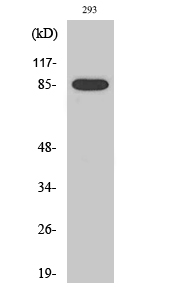
Cleaved-MPO 89k (A49) Polyclonal Antibody
- 产品详情
- 实验流程
- 背景知识
Application 
| WB, E |
|---|---|
| Primary Accession | P05164 |
| Reactivity | Human, Rat, Mouse |
| Host | Rabbit |
| Clonality | Polyclonal |
| Calculated MW | 83869 Da |
| Gene ID | 4353 |
|---|---|
| Other Names | MPO; Myeloperoxidase; MPO |
| Dilution | WB~~Western Blot: 1/500 - 1/2000. ELISA: 1/10000. Not yet tested in other applications. E~~N/A |
| Format | Liquid in PBS containing 50% glycerol, 0.5% BSA and 0.09% (W/V) sodium azide. |
| Storage Conditions | -20℃ |
For Research Use Only. Not For Use In Diagnostic Procedures.
| Name | MPO {ECO:0000303|PubMed:21880720, ECO:0000312|HGNC:HGNC:7218} |
|---|---|
| Function | Peroxidase that plays a central role in the host defense system of polymorphonuclear leukocytes by mediating both (1) formation of neutrophil extracellular trap (NETs) and (2) microbicidal activity (PubMed:16125131, PubMed:17438335, PubMed:20974672, PubMed:20974816, PubMed:22131345, PubMed:25066128, PubMed:28574339, PubMed:40963017, PubMed:4978299, PubMed:6295491). Promotes NET formation by mediating chromatin disassembly: translocates to the nucleus and specifically binds to nucleosomes, both as monomer and homodimer, leading to nucleosome unstacking and initial chromatin decondensation (PubMed:40963017). Homodimers clash with one end of the nucleosomal DNA, leading to DNA unwrapping, initiating complete disassembly of nucleosomes and chromatin transformation into NETs in an ATP- independent manner (PubMed:40963017). NETs, which are mainly composed of DNA fibers and globular proteins, are then extruded into the extracellular space by neutrophils to trap pathogens and release antimicrobial proteins to destroy them (PubMed:40963017). Participates to the microbicidal activity against a wide range of organisms by acting as a peroxidase that catalyzes the formation of oxidants in presence of hydrogen peroxide (PubMed:16125131, PubMed:17074761, PubMed:17438335, PubMed:21880720, PubMed:22131345, PubMed:22352991, PubMed:22902565, PubMed:24194519, PubMed:33273015, PubMed:9359420, PubMed:9922160). Mediates the formation of hypohalous acids, mainly hypochlorous acid (HOCl) in physiologic situations, that greatly enhance polymorphonuclear leukocyte microbicidal activity (PubMed:16125131, PubMed:17074761, PubMed:17438335, PubMed:19608745, PubMed:21880720, PubMed:22902565, PubMed:24194519, PubMed:9359420, PubMed:9922160). In addition to hypochlorous acid, catalyzes formation of hypobromous acid (HOBr), hypoiodous acid (HOI) and hypothiocyanous acid (HOSCN) (PubMed:1318692, PubMed:16125131, PubMed:17438335, PubMed:19608745, PubMed:6295491, PubMed:9359420). Also catalyzes oxidation of nitrite into the highly reactive nitrogen dioxide radical (PubMed:10777476, PubMed:8385644, PubMed:9450756). Formation of oxidants are widely believed to be responsible for much of the anti- bactericidal activity of neutrophils (PubMed:8385644, PubMed:9450756). Oxidants, such as hypochlorous acid or nitrogen dioxide radical, can also oxidize amino acid residues on proteins and generate chlorination and nitration post-translational modifications, respectively (PubMed:15314690, PubMed:15326314, PubMed:15498770, PubMed:15574409, PubMed:16091367, PubMed:7622459). Chlorination and nitration of the lipid-free form of APOA1 impairs cholesterol transport (PubMed:15326314, PubMed:15498770, PubMed:15574409). Superoxides generated by MPO can also promote dioxygenation of tryptophan residues on proteins (PubMed:16091367, PubMed:40081572). Also able to oxidize melatonin into N1-acetyl-N2-formyl-5-methoxykynuramine either in presence of hydrogen peroxide or superoxide (PubMed:15636586, PubMed:16148002). Oxidizes urate into 5-hydroxyisourate (PubMed:21266577). Functions as a nitric oxide (NO) oxidase during inflammation, by catalytically consuming NO, impairing NO's ability to maintain vascular tone and function (PubMed:12089442). May also mediate the proteolytic cleavage of alpha-1-microglobulin to form t-alpha-1- microglobulin, which potently inhibits oxidation of low-density lipoprotein particles and limits vascular damage (PubMed:25698971). |
| Cellular Location | Lysosome. Cytolytic granule. Cytoplasmic vesicle, phagosome. Secreted. Nucleus. Chromosome Note=Localizes to azurophil granules, a type of primary lysosome found in neutrophils and monocytes that contains antimicrobial proteins (PubMed:25066128, PubMed:2981589, PubMed:6095812, PubMed:6192815). A substantial fraction is also constitutively secreted by normal bone marrow granulocyte precursors (PubMed:6095812). During formation of neutrophil extracellular traps (NETs), translocates into the nucleus and associates to chromatin, leading to chromatin dislocation and its transformation into NETs (PubMed:25066128, PubMed:40963017). Core component of NETs (PubMed:22131345, PubMed:32434865, PubMed:40963017) |
| Tissue Location | Specifically expressed in neutrophils and monocytes. |
Research Areas
Application Protocols
Provided below are standard protocols that you may find useful for product applications.
BACKGROUND
Part of the host defense system of polymorphonuclear leukocytes. It is responsible for microbicidal activity against a wide range of organisms. In the stimulated PMN, MPO catalyzes the production of hypohalous acids, primarily hypochlorous acid in physiologic situations, and other toxic intermediates that greatly enhance PMN microbicidal activity.

终于等到您。ABCEPTA(百远生物)抗体产品。
点击下方“我要评价 ”按钮提交您的反馈信息,您的反馈和评价是我们最宝贵的财富之一,
我们将在1-3个工作日内处理您的反馈信息。
如有疑问,联系:0512-88856768 tech-china@abcepta.com.
¥ 1,250.00
Cat# AP63175


