


 癌症的基本特征包括细胞增殖、血管生成、迁移、凋亡逃避机制和细胞永生等。找到癌症发生过程中这些通路的关键标记物和对应的抗体用于检测至关重要。
 为您推荐一个泛素化位点预测神器——泛素化分析工具,可以为您的蛋白的泛素化位点作出预测和评分。
 细胞自噬受体图形绘图工具为你的蛋白的细胞受体结合位点作出预测和评分,识别结合到自噬通路中的蛋白是非常重要的,便于让我们理解自噬在正常生理、病理过程中的作用,如发育、细胞分化、神经退化性疾病、压力条件下、感染和癌症。
SARS-CoV-2 (COVID-19) ORF3b Antibody
Infectious Disease, COVID-19
- 产品详情
- 实验流程
- 背景知识
Application 
| WB, E |
|---|---|
| Primary Accession | P0DTC4 |
| Other Accession | P0DTC3 |
| Host | Rabbit |
| Clonality | Polyclonal |
| Isotype | IgG |
| Clone Names | ORF3b |
| Calculated MW | 8365 Da |
| Concentration (mg/ml) | 1 mg/mL |
| Conjugate | Unconjugated |
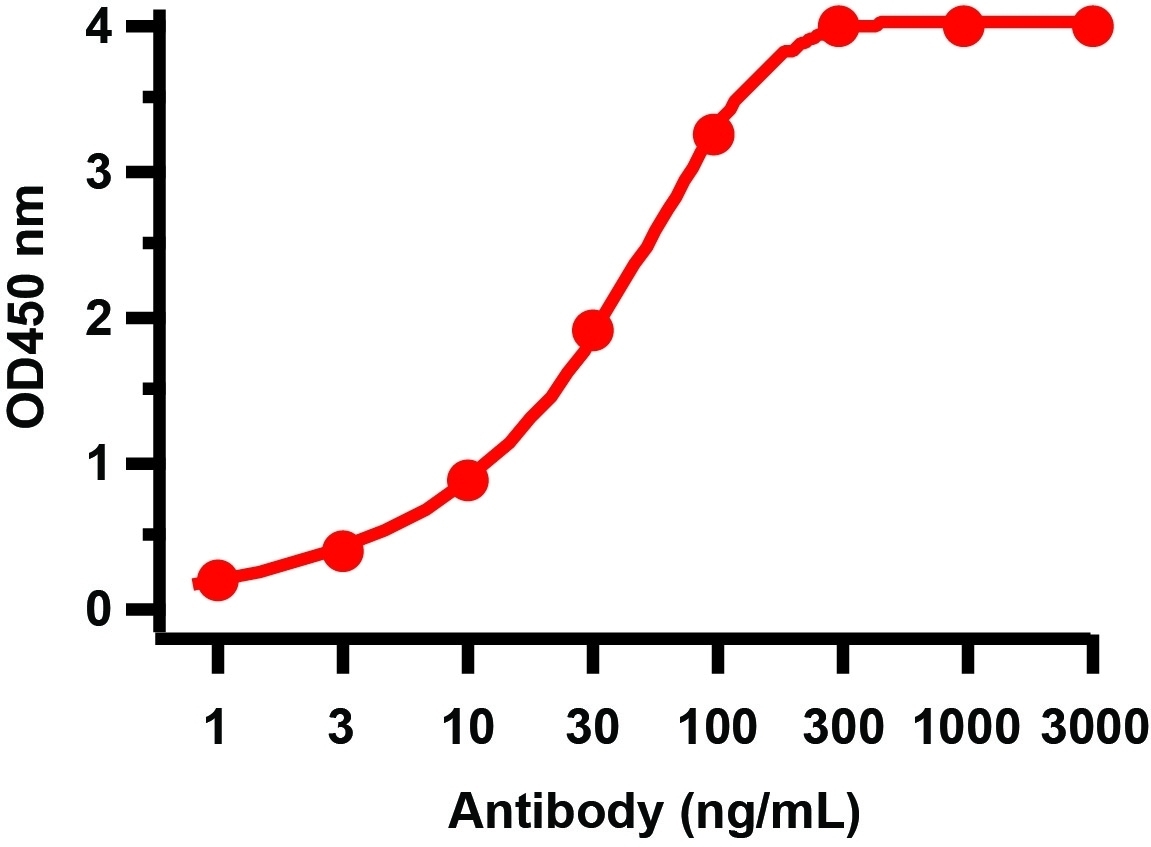
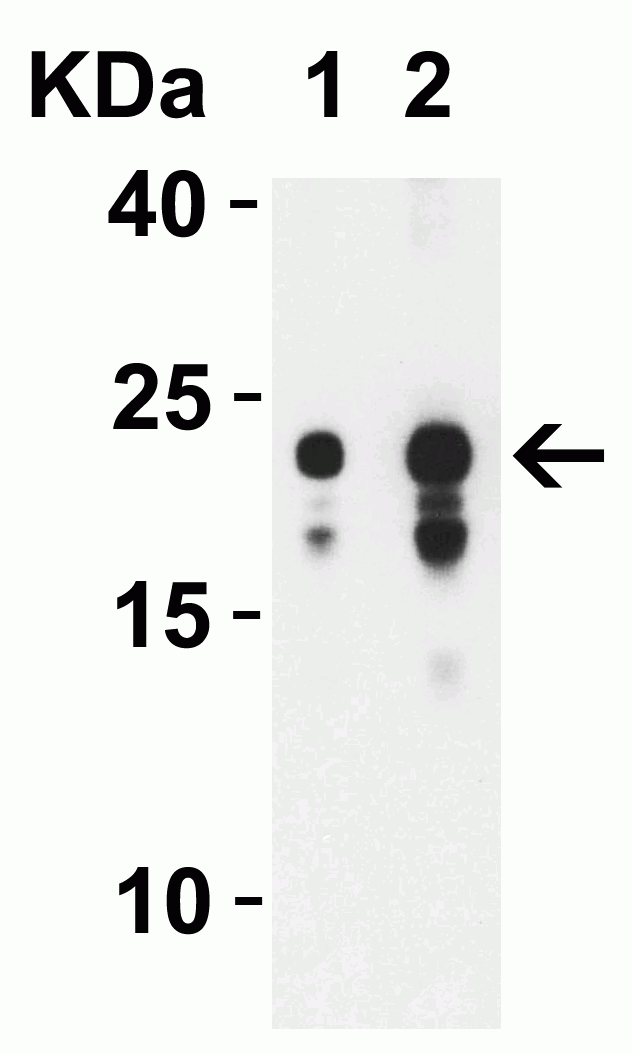
| Application Notes | WB: 0.1 μg/mL Antibody validated: SARS-CoV-2 (COVID-19) ORF3b antibody can detect 2 ng of free peptide at 1 μg/mL in ELISA. It can detect SARS-CoV-2 ORF3b recombinant protein by ELISA and WB. All other applications and species not yet tested. |
| Gene ID | 43740570 |
|---|---|
| Other Names | ORF3b protein, Acessary protein 3b, ns3b, Non-structural protein 3b, ORF3b |
| Target/Specificity | ORF3b Antibody is predicted to not cross-react with other coronavirus family members. |
| Reconstitution & Storage | SARS-CoV-2 (COVID-19) ORF3b antibody can be stored at 4˚C for three months and -20˚C, stable for up to one year. As with all antibodies care should be taken to avoid repeated freeze thaw cycles. Antibodies should not be exposed to prolonged high temperatures. |
| Precautions | SARS-CoV-2 (COVID-19) ORF3b Antibody is for research use only and not for use in diagnostic or therapeutic procedures. |
For Research Use Only. Not For Use In Diagnostic Procedures.
| Name | E {ECO:0000255|HAMAP-Rule:MF_04204} |
|---|---|
| Function | Plays a central role in virus morphogenesis and assembly. Acts as a viroporin and self-assembles in host membranes forming pentameric protein-lipid pores that allow ion transport. Also plays a role in the induction of apoptosis (By similarity). Regulates the localization of S protein at cis-Golgi, the place of virus budding (PubMed:33229438). May act by slowing down the cell secretory pathway (PubMed:33229438). May interfere with tight-junction stability by interacting with host MPP5. This would result in disruption of epithelial barriers, thereby amplifying inflammatory processes (PubMed:32891874). |
| Cellular Location | Host Golgi apparatus membrane {ECO:0000255|HAMAP- Rule:MF_04204}; Single-pass type III membrane protein {ECO:0000255|HAMAP-Rule:MF_04204, ECO:0000269|PubMed:32898469, ECO:0000269|PubMed:33177698}. Note=The cytoplasmic tail functions as a Golgi complex-targeting signal. {ECO:0000255|HAMAP-Rule:MF_04204} |
Provided below are standard protocols that you may find useful for product applications.
BACKGROUND
Coronavirus disease 2019 (COVID-19), formerly known as 2019-nCoV acute respiratory disease, is an infectious disease caused by SARS-CoV-2, a virus closely related to the SARS virus (1). The disease is the cause of the 2019–20 coronavirus outbreak (2). SARS-CoV-2 virus proteins include structural proteins, non-structural proteins and accessory factors. The structure of SARS-CoV-2 consists of the following: a spike protein (S), hemagglutinin-esterease dimer (HE), a membrane glycoprotein (M), an envelope protein (E) a nucleoclapid protein (N) and RNA. SARS-CoV-2 non-structural protein is ORF1ab that consists of 16 proteins (nsp1-nsp16), while accessory factors include ORF3a, ORF3b, ORF6, ORF7a, ORF7b, ORF3b, ORF9b, ORF9c and ORF10. ORF3b may play a role in interferon antiviral system evasion (3).
REFERENCES
Gorbalenya. bioRxiv: 2020.;Hui et al. Int J Infect Dis. 2020;91:264-266.;Konno et al. Cell Rep. 2020; 32:108185.

终于等到您。ABCEPTA(百远生物)抗体产品。
点击下方“我要评价 ”按钮提交您的反馈信息,您的反馈和评价是我们最宝贵的财富之一,
我们将在1-3个工作日内处理您的反馈信息。
如有疑问,联系:0512-88856768 tech-china@abcepta.com.


