


 癌症的基本特征包括细胞增殖、血管生成、迁移、凋亡逃避机制和细胞永生等。找到癌症发生过程中这些通路的关键标记物和对应的抗体用于检测至关重要。
 为您推荐一个泛素化位点预测神器——泛素化分析工具,可以为您的蛋白的泛素化位点作出预测和评分。
 细胞自噬受体图形绘图工具为你的蛋白的细胞受体结合位点作出预测和评分,识别结合到自噬通路中的蛋白是非常重要的,便于让我们理解自噬在正常生理、病理过程中的作用,如发育、细胞分化、神经退化性疾病、压力条件下、感染和癌症。
PTPRS Antibody (monoclonal) (M01)
Mouse monoclonal antibody raised against a full length recombinant PTPRS.
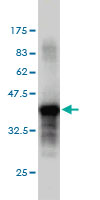
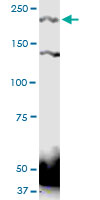
- 产品详情
- 实验流程
- 背景知识
Application 
| WB |
|---|---|
| Primary Accession | Q13332 |
| Other Accession | BC029496 |
| Reactivity | Human |
| Host | mouse |
| Clonality | monoclonal |
| Isotype | IgG2b kappa |
| Clone Names | 1H6 |
| Calculated MW | 217041 Da |
| Gene ID | 5802 |
|---|---|
| Other Names | Receptor-type tyrosine-protein phosphatase S, R-PTP-S, Receptor-type tyrosine-protein phosphatase sigma, R-PTP-sigma, PTPRS |
| Target/Specificity | PTPRS (AAH29496, 31 a.a. ~ 128 a.a) full-length recombinant protein with GST tag. MW of the GST tag alone is 26 KDa. |
| Dilution | WB~~1:500~1000 |
| Format | Clear, colorless solution in phosphate buffered saline, pH 7.2 . |
| Storage | Store at -20°C or lower. Aliquot to avoid repeated freezing and thawing. |
| Precautions | PTPRS Antibody (monoclonal) (M01) is for research use only and not for use in diagnostic or therapeutic procedures. |
For Research Use Only. Not For Use In Diagnostic Procedures.
Provided below are standard protocols that you may find useful for product applications.
BACKGROUND
The protein encoded by this gene is a member of the protein tyrosine phosphatase (PTP) family. PTPs are known to be signaling molecules that regulate a variety of cellular processes including cell growth, differentiation, mitotic cycle, and oncogenic transformation. This PTP contains an extracellular region, a single transmembrane segment and two tandem intracytoplasmic catalytic domains, and thus represents a receptor-type PTP. The extracellular region of this protein is composed of multiple Ig-like and fibronectin type III-like domains. Studies of the similar gene in mice suggested that this PTP may be involved in cell-cell interaction, primary axonogenesis, and axon guidance during embryogenesis. This PTP has been also implicated in the molecular control of adult nerve repair. Four alternatively spliced transcript variants, which encode distinct proteins, have been reported.
REFERENCES
A new role for RPTPsigma in spinal cord injury: signaling chondroitin sulfate proteoglycan inhibition. Duan Y, et al. Sci Signal, 2010 Feb 23. PMID 20179269.Trans-synaptic adhesions between netrin-G ligand-3 (NGL-3) and receptor tyrosine phosphatases LAR, protein-tyrosine phosphatase delta (PTPdelta), and PTPsigma via specific domains regulate excitatory synapse formation. Kwon SK, et al. J Biol Chem, 2010 Apr 30. PMID 20139422.Frameshift mutations in coding repeats of protein tyrosine phosphatase genes in colorectal tumors with microsatellite instability. Korff S, et al. BMC Cancer, 2008 Nov 10. PMID 19000305.Genetic variation in receptor protein tyrosine phosphatase sigma is associated with type 2 diabetes in Swedish Caucasians. L?ngberg EC, et al. Eur J Endocrinol, 2007 Oct. PMID 17893260.Protein-tyrosine phosphatase sigma is associated with ulcerative colitis. Muise AM, et al. Curr Biol, 2007 Jul 17. PMID 17614280.

终于等到您。ABCEPTA(百远生物)抗体产品。
点击下方“我要评价 ”按钮提交您的反馈信息,您的反馈和评价是我们最宝贵的财富之一,
我们将在1-3个工作日内处理您的反馈信息。
如有疑问,联系:0512-88856768 tech-china@abcepta.com.


